A made-to-measure social network for the academic world
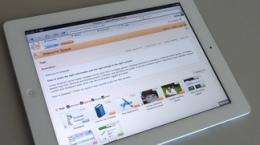
(PhysOrg.com) -- The scientists working at EPFL didn’t wait for Netvibes to get famous on connecting through a collaborative Web 2.0 platform. Already completely functional, Graaasp goes one step further than social networks, it responds to the specific needs of the academic world in terms of project management and knowledge sharing.
Why the three “a”s? “To out-do Google with its two ‘o’s,” jokes Denis Gillet, scientist at EPFL. The Graaasp project has just gone on-line and has been designed to be as a simple as possible to use but remains an extensive tool for scientists and students working on projects either individually or in groups.
But why go to the trouble of creating a new social network when there are already so many on the market? Because this one has got what others, like facebook or LinkedIn, are missing when it comes to being productive while working together. Graaasp doesn’t focus on users, but on the activities that lead these users to gather on-line and share resources.
In Graaasp, you don’t have to build up your social network to exist. Everyone has the opportunity to create spaces dedicated to given activities, and populate these spaces according the needs, inviting necessary persons and integrating useful resources.
The intelligence of the system resides in the fact that it accommodates several different types of elements, clearly distinguished by color: contacts, of course, but also private or common sub-spaces , multimedia resources and Web applications called “widgets”. Documents can be added manually or using a simple click: the “graaasp it!” feature immediately transfers a Web page to the user’s profile. This is particularly attractive for collecting documents, YouTube videos or SlideShare presentations. Moreover, the environment developed at EPFL not only allows for widgets that can be found by the thousands on the Web (such as games, equation editors or multilingual translators), but also applications specifically developed to fit the needs of teaching. “Our students can thus perform their practical work on-line, using a small piece of software that can be found in Graaasp”, explains Denis Gillet. Simulators of all kinds can also be programmed and disseminated. Nothing could be simpler in terms of sharing the results of their work with other students, or to present them to assistants for approval or to ask them related questions.
Among the advantages that the creators emphasizes is the impressive transparency fostered by the Graaasp environment. This is thumbing the nose at Facebook, with its complicated management of confidentiality parameters: “People you share information with are immediately visible on the screen. It’s very easy to bring together your colleagues, your friends or your superiors in those spaces that concern them, and to decide what each person can see or do”, Denis Gillet confirms.
Four people, financed in part by European research funds within the framework of the Role project (www.role-project.eu), are working on the ongoing development of Graaasp and its innovative system for documents, spaces, persons and widgets. “Now that the basic platform is functional, we’re expecting an organic pattern of adoption, directly involving the users”, continues Denis Gillet. Universities of Geneva and Fribourg have just begun setting up Graaasp for their students, with the help of the SWITCH Foundation. “Other objectives, such as the completion of a system for recommending documents, people or applications, are being worked on.”
So it’s really a baptism by fire for Graaasp! Anyone can now register on graaasp.epfl.ch to test the system – or adopt it straight away to work with one’s colleagues.
Provided by Ecole Polytechnique Federale de Lausanne


