Spotlight on dynamic operation of enzymes
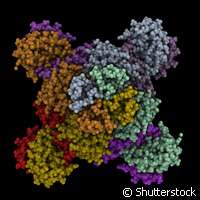
Our world is unique in that living organisms can undergo complex chemical reactions quickly and precisely, and sequence them together. But how can proteins integral to life effectively hasten these reactions? Researchers from France provide new insight into how enzymes actually work. The study is presented in the journal PLoS Biology.
Scientists from the Institut des Sciences du Végétal (IVS) at the Centre National de la Recherche Scientifique (CNRS) in France, in cooperation with colleagues from the Laboratoire de Chimie et Biochimie Pharmacologiques et Toxicologiques (LCBPT), the Institut de Biochimie et Biophysique Moléculaire et Cellulaire (IBBMC) and the Laboratoire de Cristallographie et RMN Biologique, investigated the binding of a compound with therapeutic properties to its biological target.
Experts say specific macromolecules catalyse biochemical reactions and can be reused many times. The question, however, is if these proteins can speed up the reactions. What researchers know is that the enzyme must first recognise the substrate, which then comes into contact with certain chemical groups specific to it and is later transformed. The substrate is then favoured by the chemical environment that is established, and is linked to the deformations of molecular groups physically close to each other in space, according to the researchers.
So the macromolecular assembly reaches an ephemeral state that is highly reactive. Experts define this as the 'transition state'. What results is that the biochemical reaction is accelerated by a factor of several hundred billion.
Research from the 1950s unveiled the 'induced adjustment' model that had the substrate involved in changing the enzyme's form. Here, the small compound initially interacts with the enzyme, and this interaction triggers the conformational change of the macromolecule, which in turn enables the substrate's transformation.
In this latest study, the researchers used a therapeutic target enzyme, investigating a small compound mimicking the substrate that could bind strongly to the enzyme, and blocking its activity and exhibiting antibiotic, antineoplastic and herbicidal properties.
The team says an 'induced adjustment' stage is required to ensure the efficient binding of the compound to the target enzyme. In a nutshell, it is the tiny compound that brings about the conformational modification once attached to the enzyme.
By deriving the resolution of the fine structure of this enzyme from the Arabidopsis thaliana plant, the researchers effectively illustrated the interactions and conformations of each of the enzyme and substrate, at each stage of the reaction.
A hydrogen bond is formed, stabilising the enzyme-substrate complex in the transition state. This enables the enzymatic hydrolysis reaction to be carried out efficiently.
Thanks to their results, the researchers say this model can be used on all forms of the enzyme, especially those found in bacteria, which are targeted by antibiotics. The data also show the mechanism of how a therapeutic molecule can bind to its target, making it 'unbind' from it, and thus extending the drug's effect beyond the actual treatment, they say.
The results of this study can contribute to researchers' efforts to develop or improve the pharmacological properties of drug candidates.
More information: Fieulaine, S., et al. (2011) Trapping conformational states along ligand-binding dynamics of peptide deformylase: the impact of induced fit on enzyme catalysis. PLoS Biology. DOI:10.1371/journal.pbio.1001066
Provided by CORDIS


