Fulbright scholar takes ecological theory to Andean heights
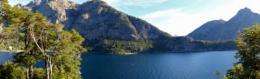
For 2011 Fulbright awardee James Elser, Argentina's soaring, glacier-laden peaks, ancient cultures, and criollo horses offer a spectacular backdrop for this region's biggest draw: access to the "last unpolluted aquatic ecosystems on Earth."
An ecologist with Arizona State University, Elser and colleague Esteban Balseiro of the Universidad Nacional del Comahue will partner and study 30 to 50 alpine lakes close to San Carlos de Barliloche in Argentinian Patagonia. Climbing 3,000 to more than 10,000 feet, the duo will characterize regional lake nutrient chemistry and examine the lakes' planktonic inhabitants.
"Esteban Balseiro has been performing some of the first comprehensive studies of this kind in this region and together we will extend his excellent work," says Elser. "Studying nutrient limitation and plankton in lakes that are not yet influenced by human activities, even in their airsheds, makes Patagonia likely the best place in the world to establish a baseline for understanding lake nutrient supplies in as close to 'ancestral,' pre-development conditions as possible."
Elser has pioneered the study of ecological stoichiometry, the examination of the balance of energy and chemical elements – most especially carbon, nitrogen and phosphorus – in ecosystems. Stoichiometric theory is becoming increasingly important in light of the multiple, and disproportionate, ways that humans are altering Earth's biogeochemical cycles, Elser says.
For example, a study by Elser and his colleagues, published in the journal Science in 2009, showed that reactive nitrogen in the air stream, elevated by urbanization and agricultural intensification, literally rains down on terrestrial and aquatic ecosystems thought outside the touch of humans. The impacts his team documented were much greater than previously recognized, shifting the fundamental ecology of alpine lakes in the Colorado Rocky Mountains and in seemingly pristine watersheds in Norway and Sweden. Such findings make studying Patagonia's lakes doubly important, Elser says, in view of the predicted population expansion and increased industrial and agricultural activity expected in South America in the coming decades.
"While nitrogen deposition impacts on terrestrial systems have been well studied, we are just learning how or if such human-induced nitrogen shifts affect biodiversity in aquatic systems," Elser says.
How energy and materials flow in ecosystems, and how the ratio of key elements drive ecological dynamics, also underlies Elser's focus on another element: phosphorus and its impact globally as a key component of fertilizer. Phosphorus helped fueled the "Green Revolution" in agriculture; however, scientists are beginning to note that quantities and qualities of this mined resources are limited, and that the bulk of the world's supply resides in Morocco. And while more than 40 countries experienced food riots in 2008 due to rising food prices – due in part to a 700-percent spike in phosphorus fertilizer costs – phosphorus is commonly overused in the developed world, with run-off from agricultural areas tied to algal blooms and expanding oceanic dead zones in coastal areas. In response to his and other scientists' concerns, Elser, a professor in the School of Life Sciences in ASU's College of Liberals Arts and Sciences, founded the ASU Sustainable Phosphorus Initiative at ASU in 2010 with colleagues Dan Childers, a professor with ASU's Global Institute of Sustainability, and Mark Edwards, a professor with the W.P. Carey School of Business. The initiative spurred the launch of the international Sustainable Phosphorus Summit in 2011, coordinated by ASU doctoral student Jessica Corman, which brought together more than 100 scientists, engineers, teachers, students and entrepreneurs to discuss how to recycle, reclaim, reuse and more sustainably manage this limited resource. South America is one of the regions of the world that has limited access to high grade phosphorus mines, and whose growing population means a heightened reliance on imported fertilizer for food. While experts cannot agree on the magnitude of the world's reserves, Elser hopes to share the concerns raised at the summit to increase awareness among colleagues and policy-makers in Argentina, Chile, and Uruguay.
"This Fulbright award opens new doors for me. It means meeting new colleagues and engaging in research with Dr. Balseiro that I couldn't have done anywhere else in the world," says Elser. "Who knows? Patagonia's aquatic habitats may be one last place to glimpse how lakes function without human perturbation, an essential baseline if we want to understand the impacts of human activities on water resources and create better outcomes for our future."
Provided by Arizona State University


