3 Questions: David Singer on the Greek Euro-tragedy
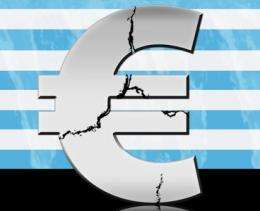
The economic and fiscal woes of Greece remain at the center of European politics. In recent months, a variety of economists and commentators have asked if Greece should consider the unprecedented move of leaving the European Currency Union, so that it could control and lower its own currency rate, in order to spur exports and growth at a time when its economy is struggling badly. David Singer, an associate professor of political science at MIT, studies international finance and the politics of national currencies. He discussed Greece and the Euro-mess with MIT News.
Q. There has been increased talk of Greece leaving the Euro. What are the basic pros and cons of Greece using the Euro as its currency?
A. Greece, like all the countries in the Eurozone, faces important trade-offs as a result of adopting the Euro. Over the past decade, it has benefited from increased trade and investment and lower borrowing costs. On the other hand, in times of economic distress, the country must adjust its own economy, rather than simply lowering the value of the currency, to pull itself out of trouble.
The European Central Bank (ECB), which controls monetary policy for the entire Eurozone, can also make adjustments by altering interest rates and influencing the value of the currency. But the ECB cannot target adjustments for particular countries. It necessarily implements a one-size-fits-all policy. Unfortunately for Greece, the ECB’s decisions have been driven by the large economies at the core of Europe, including Germany and France, which are more concerned about warding off potential inflation than having the smaller countries climb out of recession.
Q. What effect would staying with the Euro have on Greece?
A. If Greece remains in the Eurozone, it must adjust its domestic economy by severely cutting wages and government spending. To put it mildly, such cuts are not politically popular. In the medium term, Greece would have to play Odysseus and tie itself to the mast, resisting popular pressures for greater borrowing, more generous pensions and higher wages. Many analysts believe that Greece simply cannot commit itself to acting prudently in the future. One stumbling block is moral hazard: If Greece believes that Europe and the International Monetary Fund will come to its rescue, it has little incentive to commit to austere policies in the medium term.
Q. Then why not leave the Euro? Why shouldn’t Greece return to its own currency as a way of spurring economic growth?
A. To return to the parable of the Odyssey, if remaining in the Eurozone is the Scylla, exiting the Eurozone is the Charybdis. If Greece were to drop the Euro and re-adopt its own currency, the value of that currency would immediately plummet — some experts say by more than 50 percent. That could be helpful in the medium term because a weaker currency stimulates exports, but it would be disastrous in the short term. The Greeks owe a lot of money, and much of that debt is denominated in Euros. If the new Greek currency were to plummet, the real value of that already enormous debt would explode. The weaker currency would also cause significant inflation, which would further erode the purchasing power of Greek workers already suffering from wage and pension cuts.
The pain of a Greek exit from the Eurozone would also be felt by countries in the core of Europe. Banks in Germany, France, the Netherlands and other countries hold a substantial amount of Greek debt, and they could find themselves in a crisis of their own if Greece is unable to pay. Moreover, a Greek exit could raise the prospect of additional departures and thereby cause a debilitating speculative attack on the Euro.
Another obstacle is a political one: There is no exit provision in the international agreements that constitute the Eurozone. If Greece were to drop the Euro, it is not clear whether it would also have to leave the European Union.
Because Greece’s economic problems are ultimately Europe’s economic problems, my hunch is that the Europeans will do everything in their power to hold the Eurozone together, even if that means additional bailouts for the troubled countries in southern Europe.
This story is republished courtesy of MIT News (web.mit.edu/newsoffice/), a popular site that covers news about MIT research, innovation and teaching.
Provided by Massachusetts Institute of Technology


