June 8, 2011 report
Study shows climate may heavily influence plague development
(PhysOrg.com) -- An international team of scientists has undertaken a study, the results of which have been published in the Proceedings of the National Academy of Sciences, to better understand the link between climate conditions and the disease known as plague. Their results indicate that the amount of rain an area receives over a given time can greatly affect the spread of the disease.
The team, led by scientists from China, studied the Third Pandemic in China, which killed over two million people from the early eighteenth century to the beginning of the twentieth. They looked at rainfall records comparing data from that period with records dating back some 500 years. What became apparent was that the normally dry areas in the north experienced unusually wet conditions, which it is theorized, led to more plant growth, which led to more rodents, and then to more fleas, which of course are the carriers of plague. This was expected, as it has long been surmised that wetter climates lead to more plague; what was surprising however, were the findings that showed areas in the south that are normally wetter than the north, saw less plague when it got even wetter. The thinking here is that because the south is normally wet, more rain leads to floods, which tends to kill rodents, which means less fleas, and so of course less plague.
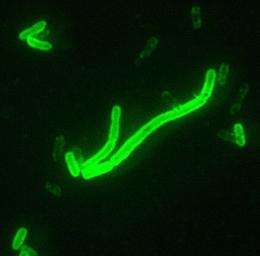
Plague, caused by the Yersinia pestis bacterium, manifests itself mainly as Bubonic, Septicemic, or Pneumonic plague, and has been responsible for the deaths of millions of people the world over, for nearly 2,600 years; ever since it first originated somewhere in China.
What’s not generally known however, at least among the general public, is that plague is still here with us today. From 1954 to 1997, for example, as noted in the paper, plague has appeared in 38 countries, including the United States. The reason this isn’t cause for alarm however, is that modern antibiotics have reduced the mortality rate of plague down from 50 to 90%, to roughly 1 to 15% depending on other conditions. What is worrying though, is the impact global warming may have on new outbreaks of the disease as drier places in some parts of the world become wetter due to changing weather patterns, especially those places where the people living there don’t have access to modern antibiotics.
More information: Nonlinear effect of climate on plague during the third pandemic in China, PNAS, Published online before print June 6, 2011, doi: 10.1073/pnas.1019486108
Abstract
Over the years, plague has caused a large number of deaths worldwide and subsequently changed history, not the least during the period of the Black Death. Of the three plague pandemics, the third is believed to have originated in China. Using the spatial and temporal human plague records in China from 1850 to 1964, we investigated the association of human plague intensity (plague cases per year) with proxy data on climate condition (specifically an index for dryness/wetness). Our modeling analysis demonstrates that the responses of plague intensity to dry/wet conditions were different in northern and southern China. In northern China, plague intensity generally increased when wetness increased, for both the current and the previous year, except for low intensity during extremely wet conditions in the current year (reflecting a dome-shaped response to current-year dryness/wetness). In southern China, plague intensity generally decreased when wetness increased, except for high intensity during extremely wet conditions of the current year. These opposite effects are likely related to the different climates and rodent communities in the two parts of China: In northern China (arid climate), rodents are expected to respond positively to high precipitation, whereas in southern China (humid climate), high precipitation is likely to have a negative effect. Our results suggest that associations between human plague intensity and precipitation are nonlinear: positive in dry conditions, but negative in wet conditions.
© 2010 PhysOrg.com


