Ugly fish to rescue threatened species
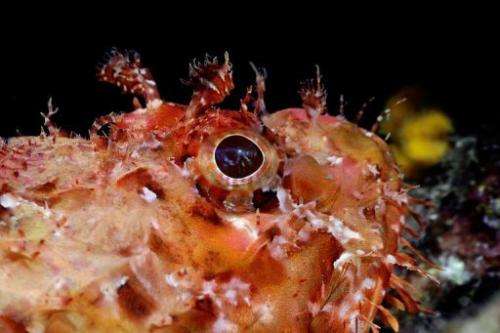
Converts to Italy's Slow Food movement can see past a few poisonous spines and bulging eyes: the scorpion fish and needlefish may be ugly but they are cheap, sustainable and taste fantastic.
"It's time to go back to eating 'poor' fish, the types that your grandma used to eat years ago. Not only are they tasty and cheap, they can save other fish from dying out," fisherman Roberto Moggia said at Italy's Slow Fish event.
Moggia and other small scale fishers threatened by industrial fishing have gathered together for four days in Genoa to give curious consumers hooked on tuna and salmon a taste of the more unusual fish they are missing out on.
Species at high risk of extinction -- from bluefin tuna to swordfish and eel -- are replaced by a large variety of sleek, spikey, flat or bloated fish of differing colours, laid out on display or served up raw, salted or pickled.
"Slow Fish brings people up close with the more unusual types of fish which are slowly making their way back into kitchens by the back door," said 49-year old Moggia, showing off his counter of whiskered and scaly sea creatures.
Visitors to the fair, held on the north Italian city's wind-blown sea front, sampled delicacies from free-range Australian oceanic trout to the Dutch Oosterschelde lobster and alternative sushi rolls, made with sustainable fish.
"We've replaced tuna and salmon with leerfish and horse mackerel, and people really can't taste the difference," said Nicola Fattibeni, a gastronomy student who helped organise the sushi session, complete with on-site Japanese chefs.
"But we're not just trying to save at-risk fish. The idea behind Slow Fish is also to help save another species: the local fisherman," he added.
While small-scale fishermen are often credited with helping protect the marine environment, their numbers are dwindling in the face of profit-seeking trawlers harvesting vast amounts of fish, large numbers of which are often dumped.
"We can probably change the way we eat, but we definitely have to change the way we fish," EU Commissioner for Fisheries Maria Damanaki said at the start of the event, organised by the Slow Food movement for "good, clean and fair food."
Many fish are being caught too early to give them chance to reproduce, but attempts to encourage sustainable fishing have already seen the list of stocks consumers are strongly advised not buy drop from 14 to 11 this year.
Damanaki also told reporters the EU was cracking down on illegal fishing, which disrupts the ecosystem, lowers fish quality and creates unfair competition. They are using a points system like the one used for driving licences.
Fattibeni and his fellow gastronomy students at the sushi stand said the problem with fish like tuna was that their flesh is often full of toxins.
"Salmon, for example, is a fatty fish which absorbs toxins from ship waste and other pollutants, particularly in the Atlantic Ocean and in Asia. Tuna feast on smaller fish full of these toxins and accumulate even more."
Visitors unsure how to tell whether they're buying the right sort of fish or what condition it is in can join in on the fair's 'personal shopper' tours.
"I do try and think about what fish I buy in the supermarket. Everyone should make an effort really. We can't better the world but we can at least not make it worse!" said Livia Polgacini.
Nearby, visitors queued for tasting sessions with international chefs who rustled up 'poor' fish dishes for them to try and offered advice such as how to impress your mother-in-law with little more than a common sardine.
"In my restaurant we don't serve tuna anymore, we use local products and traditional recipes... one of my favourites is a Venetian recipe for stargazer fish from the 1300s," said 44-year old Italian chef Gianluca Cazzin.
Dressed in his chef's garb, Cazzin explained to guests sampling his fried soft-shell crab and Roman cockle pasta just how important a role restaurants have to play in changing attitudes towards eating sustainable fish.
"Ethically speaking, people cannot go on eating fish like tuna or swordfish. The less sought-after types are great and they also cost less, but it's up to us to come up with the dishes and turn 'poor' fish into 'good' fish," he said.
"We have to preserve species for future generations by giving them the chance to reproduce. No one's going to die of hunger if we don't eat tuna for 10 years," he added.
"I hope that our children will still be able to see them swimming around in 20 years."
The seas are emptying at an alarming rate as overfishing plunders fish stocks to unsustainable levels. The 'Slow Fish' fair in Genoa highlights environmental concerns and hopes to convince consumers to look after the oceans.
(c) 2011 AFP


