Messenger to enter mercury orbit
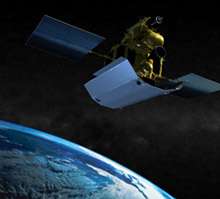
On March 17, the MESSENGER spacecraft will execute a 15-minute maneuver that will place it into orbit about Mercury, making it the first craft ever to do so, and initiating a one-year science campaign to understand the innermost planet.
Antennas from each of the three Deep Space Network (DSN) ground stations have begun a round-the-clock vigil, allowing flight control engineers at the Johns Hopkins University Applied Physics Laboratory (APL) in Laurel, Md., to monitor MESSENGER on its final approach to Mercury.
At 10:40 a.m. on Tuesday, the spacecraft began executing the last cruise command sequence of the mission. This command load will execute until next Monday, when the command sequence containing the orbit-insertion burn will start.
“This is a milestone event for our small, but highly experienced, operations team, marking the end of six and one half years of successfully shepherding the spacecraft through six planetary flybys, five major propulsive maneuvers, and sixteen trajectory-correction maneuvers, all while simultaneously preparing for orbit injection and primary mission operations,” says MESSENGER Systems Engineer Eric Finnegan. “Whatever the future holds, this team of highly dedicated engineers has done a phenomenal job methodically generating, testing, and verifying commands to the spacecraft, getting MESSENGER where it is today.”
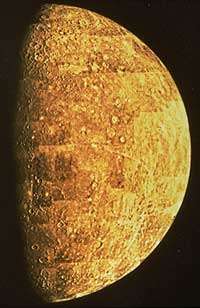
The mission operations team now turns its attention to the final preparations for the insertion burn next week and establishing nominal operations for the primary mission. As with the last three approaches to Mercury, the navigation team and the guidance and control team have been successfully using the solar radiation of the Sun to carefully adjust the trajectory of the spacecraft toward the optimum point in space and time to start the orbit-insertion maneuver.
As of the most recent navigation report on February 22, the spacecraft was less than 5 kilometers and less than three seconds from the target arrival point.
“These figures place the spacecraft well within the target corridor for successful orbit insertion,” Finnegan says. “Over the next week, additional body and solar-array attitude alternations will further refine this approach and nudge the spacecraft closer to the optimum target location. This approach will require the spacecraft to spend extended amounts of time at attitudes that do not support transmission of telemetry from the spacecraft, so monitoring of the spacecraft over the next week will be conducted with both telemetry and carrier signals.”
The in-flight preparations for this historic injection maneuver began on February 8, when several heaters on the spacecraft were configured to condition the bi-propellant used during the maneuver.
“Similar to pre-heating the diesel engine of a truck or car prior to starting in cold weather to allow ignition and prevent damage to the engine, the MESSENGER team turns on and off different heaters on the spacecraft so that the pressures for each of the two propellant species (hydrazine and nitrogen tetroxide) are at the optimum ratio for safe and efficient maneuver execution,” Finnegan explains.
Last Wednesday, the engineering and operations teams convened the last detailed review of the injection command sequence. After three iterations of this command sequence, countless Monte-Carlo simulations by the guidance and control team, numerous propulsion modeling simulations, and more than 30 hardware simulations covering all manner of nominal and anomalous operating configurations, the sequence and the associated fault protection configuration have been given the green light to start final preparations for upload to the spacecraft this week.
"The cruise phase of the MESSENGER mission has reached the end game,” adds MESSENGER Principal Investigator Sean Solomon, of the Carnegie Institution of Washington. "Orbit insertion is the last hurdle to a new game level, operation of the first spacecraft in orbit about the solar system’s innermost planet. The MESSENGER team is ready and eager for orbital operations to begin."
Studying Mercury could yield important information about how rocky, terrestrial planets form and evolve. Such information can help astronomers determine how and where potentially habitable planets are most likely to form beyond the solar system.
Source: Astrobio.net


