Asia rice output threatened by pesticide overuse
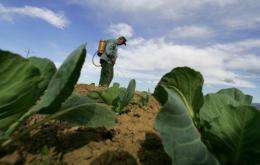
The unbridled manufacture and use of pesticides in Asia is raising the spectre of "pest storms" devastating the region's rice farms and threatening food security, scientists have warned.
Increased production of cheap pesticides in China and India, lax regulation and inadequate farmer education are destroying ecosystems around paddies, allowing pests to thrive and multiply, they said.
The problem has emerged over the last decade and -- if left unchecked -- pests could lay waste to vast tracts of Asia's rice farms, according to scientists who took part in a workshop in Singapore last week.
"There is increasing concern that the more we use pesticides in rice fields, it is actually making the pest problem worse," Australian scientist George Lukacs told AFP in an interview.
Under pressure to raise yields to meet growing demand, poorly trained farmers tend to be over-reliant on the chemicals.
"There are big outbreaks of pests or what they are calling in China 'pest storms' as a result of the over-application of pesticides," Lukacs said.
Rice is a staple throughout much of Asia, including the world's two most populous countries China and India, making the region vulnerable to soaring food prices and supply problems, economists say.
The UN food agency has said world food prices have already hit record highs and warned oil price spikes caused by upheavals in the Middle East and North Africa could push them even higher.
The Food Price Index, which monitors average monthly price changes for a variety of key staples, rose to 236 points in February from 231 points in January, the Food and Agriculture Organisation (FAO) said.
It was the highest level since the FAO began monitoring prices in 1990.
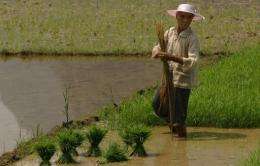
Lukacs said Asia's rice supply was made more vulnerable by the reliance on a small number of varieties, meaning if a particular pest gets a foothold in a crop, it could spread rapidly.
"In some countries, the majority of rice production is based around two or three varieties of rice, so that actually increases the risk to international food security if there is a big disease out there," he said.
The Singapore workshop was attended by scientists from right across the region, including Australia, India, Japan, Malaysia, the Philippines, Singapore, South Korea and Vietnam.
It was held as part of preparations for next year's meeting in Bucharest of the Ramsar Convention, an inter-governmental treaty on the conservation and wise use of the world's wetlands -- including rice paddies -- and their resources.
Lukacs, a workshop co-organiser, said that in China and other parts of Asia, the unregulated use of chemicals has led to pests developing resistance.
The problem is compounded by indiscriminate application, which has destroyed the ecosystem surrounding the paddies, including the predators such as spiders and dragonflies that would normally keep pest numbers down.
"The predator pressure is gone and the pests don't respond (to pesticides) because they develop resistance very quickly," Lukacs said.
Lukacs, senior principal research scientist with the Australian Centre for Tropical Freshwater Research at James Cook University, said responsibility lies with the pesticide companies, governments and local communities.
Once a pesticide is registered with a country's national authority, there is no monitoring of how it is used, he said.
"(The industry is) remarkably unregulated. Beyond the registration, it's the Wild, Wild West," said Lukacs, who is also the expert on agriculture for the Ramsar Convention's Scientific and Technical Review Panel.
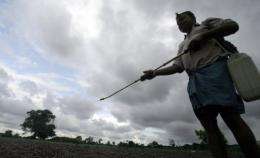
Lukacs and his fellow scientists are calling for closer cooperation among pesticide manufacturers, government regulators and local communities to come up with "best practices" in the production and use of the chemicals.
Pesticide makers must have "stewardship" of their products, while governments and communities should be responsible for regulation as well as training and education of the farmers, he said.
"Responsibility goes beyond just selling the drum, and that means trying to bring regulators, scientists and community members together," he said.
"It's a serious problem and the worst is that we haven't seen the full effects yet."
(c) 2011 AFP


