We can do better than tolerate group differences, says psychologist, we can use them to enrich life
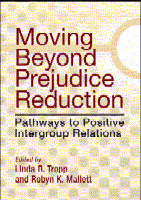
When Martin Luther King, Jr., dreamed of the day racial tensions would fade away, he envisioned a world where real connections and friendships could emerge across racial lines. In a similar way, a new book edited by University of Massachusetts Amherst social psychologist Linda Tropp and Robyn Mallett of Loyola University of Chicago, explores how positive relations among different racial and ethnic groups can go beyond simply reducing prejudice.
The new 212-page volume, "Moving Beyond Prejudice Reduction: Pathways to Positive Intergroup Relations," published this week on King’s birthday, collects writings by leading social psychologists who identify effective strategies for reaching across racial and ethnic divides. The book examines motivations and processes that underlie our ability to develop meaningful relationships between groups and promote trust, empathy and forgiveness.
"What we’re hoping to do with this book is to go beyond social psychology’s traditional focus on reducing prejudice, and instead explore how people are motivated to actively engage with members of other groups," Tropp says.
The need for this compilation came from Tropp and Mallett’s observation that increasingly, people report anxiety or uncertainty rather than prejudice or hostility when reflecting on what to expect or how to act with members of other groups. Though these concerns are often overlooked, they can act as formidable barriers to developing positive attitudes and relationships, she adds.
An award-winning researcher, Tropp is director of the Psychology of Peace and Violence Program at UMass Amherst. She has worked on national and state initiatives to improve race relations in schools and has evaluated programs designed to reduce racial and ethnic conflict.
The eleven chapters in this book published by the American Psychological Association are organized in four broad sections: Reconceptualizing Intergroup Attitudes, Motivations and Expectations in Cross-Group Relations, Forging Cross-Group Relationships and Applications to Post-Conflict Reconciliation. This last topic points to similarities between processes that contribute to race relations in the United States and those that underlie conflicts in other parts of the world, such as between Arabs and Israelis in the Middle East, religious communities in Northern Ireland, racial groups in South Africa and political factions in Post-Pinochet Chile.
"It is our hope that by bringing these perspectives together in one volume, we can begin to chart new directions for research that emphasize positive pathways to improved intergroup relations," the editors state. "That is, rather than focusing on reducing prejudice and conflict, we can actually work to enhance mutual liking, trust and friendship between groups."
More information: www.apa.org/pubs/books/4316127.aspx
Provided by University of Massachusetts Amherst


