Meteorite just one piece of an unknown celestial body
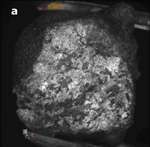
(PhysOrg.com) -- Scientists from all over the world are taking a second, more expansive, look at the car-sized asteroid that exploded over Sudan's Nubian Desert in 2008. Initial research was focused on classifying the meteorite fragments that were collected two to five months after they were strewn across the desert and tracked by NASA's Near Earth Object astronomical network. Now in a series of 20 papers for a special double issue of the journal Meteoritics and Planetary Science, published on December 15, researchers have expanded their work to demonstrate the diversity of these fragments, with major implications for the meteorite's origin.
In the first round of research, Carnegie Geophysical scientist Doug Rumble, in collaboration with Muawia Shaddad of the University of Khartoum, examined one fragment of the asteroid, called 2008 TC3, and determined that it fell into a very rare category of meteorite called ureilites. Ureilites have a very different composition from most other meteorites. It has been suggested that all members of this meteoric family might have originated from the same source, called the ureilite parent body, which could have been a proto-planet.
Now Rumble has expanded his work to examine 11 meteorite fragments, focusing on the presence of oxygen isotopes. Isotopes are atoms of the same element that have extra neutrons in their nuclei.
Rumble explains: "Oxygen isotopes can be used to identify the meteorite's parent body and determine whether all the fragments indeed came from the same source. Each parent body of meteorites in the Solar System, including the Moon, Mars, and the large asteroid Vesta, has a distinctive signature of oxygen isotopes that can be recognized even when other factors, such as chemical composition and type of rock, are different."
Rumble and his team prepped tiny crumbs of these 11 meteorite fragments and loaded them into a reaction chamber where they were heated with a laser and underwent chemical reactions to release oxygen and then used another device, called a mass spectrometer, to measure the concentrations of these oxygen isotopes. Results showed that the full range of oxygen isotopes known to be present in ureilites were also present in the studied fragments.
"It was already known that the fragments in the Nubian Desert came from the same asteroid. Taking that into account, these new results demonstrate that the asteroid's source, the ureilite parent body, also had a diversity of oxygen isotopes," says Rumble.
The diversity of oxygen isotopes found in ureilites probably arises from the circumstances of the parent this body's formation. Rumble theorizes that the rock components of this parent body were heated to the point of melting and then cooled into crystals so quickly that the oxygen isotopes present could not come to an equilibrium distribution throughout.
Together the collection of 20 papers published in Meteoritics and Planetary Science offer enormous insight about the formation and composition of ureilites and their hypothesized parent body.
Provided by Carnegie Institution
-
From lemons to lemonade: Reaction uses carbon dioxide to make carbon-based semiconductor,
28 comments
-
Thioridazine kills cancer stem cells in human while avoiding toxic side-effects of conventional cancer treatments,
3 comments
-
SpaceX private rocket blasts off for space station (Update),
41 comments
-
Climate scientists say they have solved riddle of rising sea,
30 comments
-
Scotland passes turbine test to harness tidal power,
40 comments
-
revamping general concept and cosmological principle
18 hours ago
-
Transiting Exoplanet Light Curve
May 25, 2012
-
Math behind Theoretical Physics
May 24, 2012
-
Do we know whats at the center of galaxies yet?
May 23, 2012
-
Structure of the Milky Way?
May 20, 2012
-
What would it take to terraform Pluto and Charon?
May 19, 2012
- More from Physics Forums - General Astronomy
More news stories
Dragon arrives at space station in historic 1st (Update 2)
The privately bankrolled Dragon capsule made a historic arrival at the International Space Station on Friday, triumphantly captured by astronauts wielding a giant robot arm.
Space & Earth / Space Exploration
21 hours ago |
5 / 5 (8) |
13
Aliens don't want to eat us, says former SETI director
Alien life probably isnt interested in having us for dinner, enslaving us or laying eggs in our bellies, according to a recent statement by former SETI director Jill Tarter.
Space & Earth / Space Exploration
23 hours ago |
4.8 / 5 (10) |
26
SKA super telescope to be built in Australia, South Africa (Update 2)
A long-running joust to host a radio telescope that would give mankind its farthest peek into the Universe ended on Friday with a Solomon-like judgement to split the site between Australia and South Africa.
23 hours ago |
5 / 5 (5) |
2
Get ready for the transit of Venus
Scientists and amateur astronomers around the world are preparing to observe the rare occurrence of Venus crossing the face of the Sun on 5-6 June, an event that will not be seen again for over a hundred years.
Space & Earth / Space Exploration
23 hours ago |
5 / 5 (2) |
0
Dragon makes history with space station docking
The private company SpaceX made history Friday with the docking of its Dragon capsule to the International Space Station, the most impressive feat yet in turning routine spaceflight over to the commercial ...
Space & Earth / Space Exploration
14 hours ago |
4.8 / 5 (6) |
0
Landmark calculation clears the way to answering how matter is formed
(Phys.org) -- An international collaboration of scientists, including Thomas Blum, associate professor of physics, is reporting in landmark detail the decay process of a subatomic particle called a kaon ...
Of mice and mental models: Neuroscientific implications of risk-optimized behavior in the mouse
(Medical Xpress) -- Regardless of an organism’s biological complexity, every encephalized animal continuously makes under-informed behavioral choices that can have serious consequences. Despite its ubiquity, ...
Researchers demonstrate possible primitive mechanism of chemical info self-replication
(Phys.org) -- When scientists think about the replication of information in chemistry, they usually have in mind something akin to what happens in living organisms when DNA gets copied: a double-stranded molecule ...
Oldest Jewish archaeological evidence on the Iberian Peninsula
German archaeologists of the Friedrich Schiller University Jena found one of the oldest archaeological evidence so far of Jewish Culture on the Iberian Peninsula at an excavation site in the south of Portugal, ...
MIT researchers devise new means to synchronize a group of robots (w/ Video)
(Phys.org) -- For several years, roboticists have been working out ways to get a group of robots to perform synchronized activities as demonstrated most often in dance routines. Its not just about trying ...
High-speed method to aid search for solar energy storage catalysts
Eons ago, nature solved the problem of converting solar energy to fuels by inventing the process of photosynthesis.
Dec 15, 2010
Rank: 1 / 5 (1)
Sometimes, the answer is right underneath their noses.
Dec 15, 2010
Rank: 2 / 5 (5)
I don't see how this could be possible, because virtually nothing in the solar system has uniform composition. A meteor that orginated from the Martian Poles would be expected to be different from one originating from the equator.
A meteor originating from Canada would be expected to be different than one originating from the Gulf of Mexico, assuming anything was ever ejected to space from any of those craters.
Planets don't have uniform compositions, they have lava flows, they have sedimentary and metamorphic rocks, etc, and all of these would have different mineralogy even for the same parent object.
Dec 15, 2010
Rank: 1.6 / 5 (5)
If everything is as old as the geologists and astronomers claim it is, then that means the Sun has made roughly 13.3 complete orbits of the Milky Way's center of gravity since the Earth existed.
This means the Solar System would have likely passed through many, many different types of galactic nebulae with varying compositions during that time. These nebulae would influence the isotope ratio in various rocks at various ages because the gases would fall to the planets atmosphere or surface as micro meteors and eventually be incorporated in soils. For planets like earth, the oldest of these would have been subducted into the mantle already, and possibly even being reconstituted in volcanoes as lava.
Generally, it's just an overly simplistic model for finding the origin of a meteorite.
I think it is a lot more fruitful if they can COMBINE such an approach with the obvious regression of the meteorite's orbit, but alone it's nearly useless.
Dec 15, 2010
Rank: 4 / 5 (2)
Dec 16, 2010
Rank: 5 / 5 (1)
Mars, Earth and Vesta share the same ratio of Oxygen isotopes. The Oxygen isotope ratios of other bodies in the Solar System (the Moon for instance), differ from the Earth, Mars, Vesta baseline.