The day the algae died
The P-T mass extinction may have been instigated by populations of algae dying. According to one group of scientists, this die-off of large numbers of relatively simple life forms caused a crash in the ocean's entire food web.
The mass extinction at the end of the Permian period almost cleared the planet of life 250 million years ago. Only one in ten species in the ocean survived. Two-thirds of reptiles and amphibians disappeared. Even plants and insects suffered major losses. But in this near-perfect strike, the first "pin" to topple may have been algae, according to researchers studying molecular fossils from this time.
The Permian-Triassic, or P-T, extinction event happened long before dinosaurs had even appeared on the scene. Often called the Great Dying, it was the most dramatic pruning of the tree of life that we have on record.
"It was not only the largest, but also the most enigmatic mass extinction of all time," says Roger Summons from MIT.
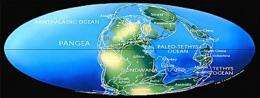
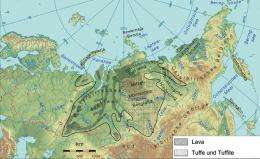
Unlike the dinosaur die-off, there's no credible evidence of an asteroid impact to blame for the P-T extinction. Instead, scientists have been forced to sort through a number of factors: The formation of the supercontinent Pangaea reduced shallow marine habitats; slower ocean circulation deprived the deep ocean of oxygen; and one of the largest volcanic eruptions in history caused a spike in carbon dioxide that would have greatly warmed the planet.
On top of all that, hydrogen sulfide – a lethal gas that smells of rotten eggs – may have poisoned the ocean and the atmosphere. Summons and his colleagues are leading proponents of this theory, having discovered molecular evidence for a substantial proliferation of bacteria that rely on hydrogen sulfide for their metabolism.
The group is now looking further into this idea by posing and then testing hypotheses about the effects of sulfide on the primary producers of the ocean. As part of the Astrobiology: Exobiology and Evolutionary Biology program at NASA, they will be exploring signs of an early algae die-off about 1.5 million years before the main P-T extinction event.
Without algae, bacteria would have become the basis of the ocean food chain. Such an ecosystem would have been vulnerable, presumably wobbling along until some tipping point brought all the other pins tumbling down.
Molecular fossils
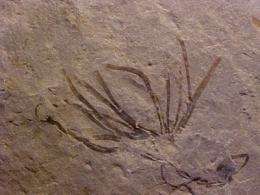
The P-T extinction is clearly demarcated in the fossil record by the abrupt disappearance of bone and shell fragments in sedimentary layers of rock. But not all the evidence is so clear to the naked eye: there are also molecular traces of life that show a dramatic change.
Summons and his colleagues are able to isolate complex hydrocarbon molecules from organic material found in sediments. These so-called biomarkers are the stable residues of membranes and photosynthetic pigments from long-dead microbes.
In certain cases, the research team has been able to identify exactly which microbe is implicated by a particular molecule. For example, certain pigments are only used by specific types of photosynthesizing bacteria. Steroids are indicative of the membranes around microscopic algae.
"They are like finding a piece of a human skull," Summons explains. "If the fragment is large enough, it's possible to differentiate it from an ape skull."
He and his colleagues have identified molecular "skeletons" from rocks of various ages, going back as far as 2.7 billion years ago.
Black Seas on every shore
In regard to the P-T extinction, rock samples from different parts of the world that were laid down at this time period show a significant increase in biomarkers from green-sulfur bacteria, which are anaerobic photosynthesizing microbes that use hydrogen sulfide (H2S) instead of water (H2O) as an electron donor.
Green-sulfur bacteria are found – among other places – in the Black Sea at depths of about 100 meters (330 feet). There, they get just enough sunlight, as well as a steady supply of hydrogen sulfide from sulfate-reducing bacteria that dwell in the murky depths below.
The Black Sea is a rather unique place. At the surface, freshwater from the Danube River stays separate from denser saltwater at the bottom. The lack of turnover means there is no oxygen at lower levels. This is a boon for sulfate-reducing bacteria, which eat the organic matter that sinks down from the top layers. As part of their metabolism, the sulfate-reducers expel hydrogen sulfide that rises to the surface where green-sulfur bacteria gobble it up.
Long ago, this sulfur exchange, called euxinia, was not limited to places like the Black Sea. Geologists have evidence that euxinia was prevalent throughout the Earth's oceans starting 2.3 billion years ago, when the amount of oxygen began to rise in the atmosphere. Sulfur held its biologic prominence until oxygen reached its current level of 21% around 800 million years ago.
However, the fact that Summons and colleagues have found 8 different late Permian sites with green-sulfur bacteria biomarkers means that sulfide made a temporary comeback, at least in some parts of the open ocean.
"What we are saying happened around the P-T event is a reversion to the Proterozoic sulfidic ocean," Summons says.
This is in agreement with other lines of evidence, such as a peak in the level of the mineral pyrite at roughly the same time as the biomarkers. As an iron sulfide, pyrite would be another by-product of sulfate-reducing bacteria.
A lethal stench
The work by Summons' group, which includes collaborators who are experts on the geology of China, Australia, Canada and Greenland, may highlight the primary mechanism behind the Great Dying.
"The biomarkers provide strong support for the hypothesis that hydrogen sulfide, a lethal gas that is soluble in water, penetrated into the shallow ocean … where it also likely escaped into the atmosphere, causing disruption to both marine and terrestrial ecosystems," says Lee Kump of Penn State University, who has modeled this hydrogen sulfide catastrophe.
Hydrogen sulfide is deadly because it binds to certain iron-containing enzymes that are important to aerobic respiration in cells. This means it is a very effective killer not only of animals but also plants.
Dave Bottjer from USC sees the H2S-release contributing to other environmental factors that were occurring around the same time, like the huge outpouring of volcanic magma at the Siberian Traps in modern-day Russia. The eventual release of carbon dioxide would have been equivalent to "millions of coal-fired power plants," thus leading to intense global warming.
The end-Permian environment "was a train wreck," Bottjer says. "The hydrogen sulfide was probably the coup de grace."
Algae keep food chain afloat
One problem, though, is that the biomarkers associated with sulfur-based organisms appeared 1.5 million years before the P-T event. This suggests that hydrogen sulfide was coursing through parts of the ocean long before the mass extinction got under way.
Summons explains this by claiming that the ocean ecology was not immediately wrecked by the onset of euxinia, but one very important constituent did suffer: algae.
As an energy-rich source of food, algae are able to support a complex marine ecosystem. If their numbers declined due to H2S-poisoning during the late Permian, there would still be other photosynthesizing organisms, like cyanobacteria, that could provide a basis to the food chain -- but just not a very good one, according to Summons.
"There are few animals that will feed successfully on bacteria," he says. As algae populations dwindled, life continued in the oceans for over a million years, but eventually the stress became too much and widespread extinctions occurred.
Summons contrasts this with the K-T extinction event that killed off the dinosaurs but made little dent in the algae population. As a result, the ecological system apparently recovered much faster from the asteroid that caused the K-T.
"I do agree that the loss of algae or algal diversity would have a profound impact on aquatic ecosystems," says USC biologist Astrid Schnetzer. "In contrast to bacteria, they represent a tremendous variety of morphologies and life histories." But Schnetzer cautions that it is extremely difficult to predict how the niche held by algae would be filled in their absence.
Indeed, some researchers might disagree with Summons' assumption that bacteria make a poor substitute for algae. They claim that the near-disappearance of stromatolites, which are the fossil remains of microbial mats, was due to the rise of bacteria-grazing animals. Summons admits that possibility, but believes that the stromatolite decline could be explained by other mechanisms, such as changes in ocean chemistry or the proliferation of protists (eukaryote microorganisms like amoebas).
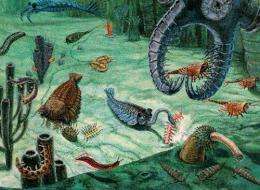
To confirm the crucial role of algae in the P-T extinction, Summons and his colleagues will be charting more precisely the changes in the levels of algal steroid residues. They plan to compare this data to the Cambrian explosion 530 million years ago, when a great diversification of multi-cellular life occurred. This mass expansion of life was essentially the opposite of a mass extinction. And it may have been driven in part by a greater reliance on algae rather than bacteria.
To Summons' way of thinking, there should be some symmetry between the preludes to the Cambrian explosion and the P-T extinction.
You might say: As goes algae, so goes diversity.
Source: Astrobio.net


