PNNL's Richard Smith named 2010 Scientist of the Year by R&D Mag
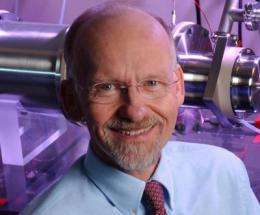
Parkinson's disease, cancer and biofuels production are just a few problems that biochemist Dick Smith has helped untangle in his long career of technological innovation and scientific insight. Now, R&D Magazine has honored Smith as 2010 Scientist of the Year for his many significant contributions to science.
Called "creative," "innovative" and "adventurous" by his colleagues, Smith is currently the director of proteomics at the Department of Energy's Pacific Northwest National Laboratory. Since the 1980s, Smith has pushed technological advancements in this field, bringing analytical chemistry techniques into the domain of microbiologists and medical researchers. He is the first DOE scientist to earn this honor.
Smith is one of the most-published scientists in the field of proteomics, which seeks to understand biology by the complement of proteins at work within organisms, tissues or cells. Since the Human Genome Project developed a blueprint of all human genes in our chromosomes earlier this century, proteomics researchers have pushed to understand how the blueprint creates life. Genes are the blueprints of proteins, which are the cogs, gears and levers in complex, intricate biological machines.
Proteins often go wrong in disease or infection, and finding those requires sifting through thousands of other proteins. Many problem proteins don't have names or are too rare to find easily.
In the last few years, Smith has led work that trimmed analytical steps from hours to minutes. The increase in speed has enabled many samples to be processed faster in high-throughput experiments. Smith led other advances in sensitivity and accuracy that have improved the ability to find rare proteins, bringing proteomics technology to the doorstep of clinical researchers.
Smith and collaborators have applied the technology to liver disease and cancer in the hopes of finding rare markers of disease in blood, making diagnosis or treatment safer and faster. In 2007, Scientific American magazine listed Smith and his collaborator Desmond Smith as one of the top 50 researchers for work to understand the origins of Parkinson's disease by mapping where proteins amass in diseased mouse brains.
Among other work, Smith and colleagues have looked at how bacteria and viruses might cause illness. They've learned breast cancer leaves traces behind in the blood that doctors might exploit someday. Smith has led studies for DOE into possible roles for microbes in making biofuels. In other DOE studies, he's examined how large environmental communities of microbes function in our ecosystem and affect our environment. An intimate understanding of how microbes work will let researchers employ them to trap radioactive contaminants or greenhouse gases.
In accepting the award, Smith joins the ranks of such preeminent scientists as Eric Lander, director of Massachusetts Institute of Technology's Broad Institute and one of the leaders of the Human Genome Project; Susan Solomon, a NOAA chemist who connected CFCs to the ozone hole; and George M. Whitesides, a Harvard University chemist and winner of the 2009 Dreyfus Prize in the Chemical Sciences for new materials that have significantly advanced the field of chemistry.
"I'm surprised and pleased at the honor, and happy to be in such great company," said Smith. "And I'm especially grateful to the incredibly talented team of researchers at the lab who I have been able to work with."
Much of his group's cutting-edge technology -- including mass spectrometers beefed up with ion funnels and electrospray ionization -- is housed at EMSL, DOE's Environmental Molecular Sciences Laboratory on the PNNL campus. A number of the developments have been licensed to private companies. R&D Magazine will present the award to Smith at a ceremony in Orlando, Fla. on Nov. 11.
Provided by Pacific Northwest National Laboratory


