Page 14: Research news on Biomolecules

Biomolecules, as physical systems, are distinct molecular entities synthesized or utilized by living organisms that exhibit specific structural, thermodynamic, and dynamical properties enabling biological function. They include nucleic acids, proteins, lipids, carbohydrates, and diverse metabolites, each characterized by defined covalent connectivity, three-dimensional conformations, and interaction potentials with solvents, ions, and other biomolecules. Their behavior is governed by quantum-mechanical bonding, classical electrostatics, and statistical thermodynamics, leading to emergent phenomena such as self-assembly, allostery, enzyme catalysis, and molecular recognition. In physical systems research, biomolecules are studied through techniques like spectroscopy, crystallography, cryo-EM, and molecular simulations to elucidate structure–function relationships and energy landscapes.

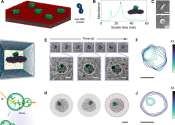
A 'nano-robot' built entirely from DNA to explore cell processes

Constructing a tiny robot from DNA and using it to study cell processes invisible to the naked eye.... You would be forgiven for thinking it is science fiction, but it is in fact the subject of serious research by scientists ...

D-peptide ligand of Y1 receptor developed for targeting gliomas

A research group led by Prof. Wu Aiguo at the Ningbo Institute of Materials Technology and Engineering (NIMTE) of the Chinese Academy of Sciences (CAS), in cooperation with Prof. Dan Larhammar's group at Uppsala University, ...

Researchers create self-assembled logic circuits from proteins

In a proof-of-concept study, researchers have created self-assembled, protein-based circuits that can perform simple logic functions. The work demonstrates that it is possible to create stable digital circuits that take advantage ...

Live wire: New research on nanoelectronics

Proteins are among the most versatile and ubiquitous biomolecules on earth. Nature uses them for everything from building tissues to regulating metabolism to defending the body against disease.

Chemists use DNA to build the world's tiniest antenna

Researchers at Université de Montréal have created a nanoantenna to monitor the motions of proteins. Reported this week in Nature Methods, the device is a new method to monitor the structural change of proteins over time—and ...

How to program DNA robots to poke and prod cell membranes

Scientists have worked out how to best get DNA to communicate with membranes in our body, paving the way for the creation of 'mini biological computers' in droplets that have potential uses in biosensing and mRNA vaccines.

Developing better nanopore technology

At the simplest of levels, nanopores are (nanometre-sized) holes in an insulating membrane. The hole allows ions to pass through the membrane when a voltage is applied, resulting in a measurable current. When a molecule passes ...

page 14 from 15