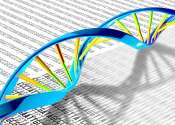
Biomolecules, as physical systems, are distinct molecular entities synthesized or utilized by living organisms that exhibit specific structural, thermodynamic, and dynamical properties enabling biological function. They include nucleic acids, proteins, lipids, carbohydrates, and diverse metabolites, each characterized by defined covalent connectivity, three-dimensional conformations, and interaction potentials with solvents, ions, and other biomolecules. Their behavior is governed by quantum-mechanical bonding, classical electrostatics, and statistical thermodynamics, leading to emergent phenomena such as self-assembly, allostery, enzyme catalysis, and molecular recognition. In physical systems research, biomolecules are studied through techniques like spectroscopy, crystallography, cryo-EM, and molecular simulations to elucidate structure–function relationships and energy landscapes.