Scientists construct organo-phosphatic shells of brachiopods
Biomineralized columns, stacked in layers like a sandwich gave Cambrian brachiopod shells their strength and flexibility 520 million years ago.

Biomineralized columns, stacked in layers like a sandwich gave Cambrian brachiopod shells their strength and flexibility 520 million years ago.
Evolution
Apr 18, 2024
0
33

Water lettuce (Pistia stratiotes L.), also known as Nile cabbage, is a free-floating aquatic plant from the family Araceae, the same family as the arum lily.
Plants & Animals
Apr 10, 2024
0
1

When you throw dinosaurs into the mix, sometimes you find that a rule simply isn't.
Paleontology & Fossils
Apr 6, 2024
4
361

For almost 15 years, scientists have debated whether the Anthropocene should be an official geological epoch marking the profound influence of humans on the planet. Then in March, an international panel of scientists formally ...
Earth Sciences
Apr 4, 2024
0
27
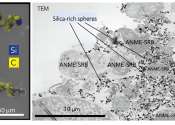
Communities of microbes that live in ocean sediments can consume methane. In oxygen-deprived sediments these microbes form clusters, called aggregates, that can have deposits of silica on their surfaces. It is not clear if ...
Cell & Microbiology
Mar 28, 2024
0
1
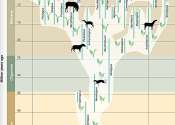
Many people assume that horses first came to the Americas when Spanish explorers brought them here about 500 years ago. In fact, recent research has confirmed a European origin for horses associated with humans in the American ...
Evolution
Mar 27, 2024
0
24

Paleontologists from the University of Zurich have announced the discovery of a new species of freshwater dolphin in the Peruvian Amazon region. Surprisingly, its closest living relatives can be found in the river dolphins ...
Paleontology & Fossils
Mar 20, 2024
0
5057

In the quest to decipher the evolutionary relationships of extinct organisms from fossils, researchers often face challenges in discerning key features from weathered fossils, or with prioritizing characteristics of organisms ...
Molecular & Computational biology
Mar 20, 2024
0
54

In a new study, researchers have used the fossil record to better understand what factors make animals more vulnerable to extinction from climate change. The results could help to identify species most at risk today from ...
Plants & Animals
Mar 7, 2024
0
64

For the first time, scientists have been able to explain the mystery behind the unusual chemical composition in one of the universe's most distant galaxies. The state-of-the-art theoretical model that the breakthrough research ...
Astronomy
Mar 7, 2024
12
98
Fossils (from Latin fossus, literally "having been dug up") are the preserved remains or traces of animals, plants, and other organisms from the remote past. The totality of fossils, both discovered and undiscovered, and their placement in fossiliferous (fossil-containing) rock formations and sedimentary layers (strata) is known as the fossil record. The study of fossils across geological time, how they were formed, and the evolutionary relationships between taxa (phylogeny) are some of the most important functions of the science of paleontology. Such a preserved specimen is called a "fossil" if it is older than some minimum age, most often the arbitrary date of 10,000 years ago. Hence, fossils range in age from the youngest at the start of the Holocene Epoch to the oldest from the Archaean Eon several billion years old. The observations that certain fossils were associated with certain rock strata led early geologists to recognize a geological timescale in the 19th century. The development of radiometric dating techniques in the early 20th century allowed geologists to determine the numerical or "absolute" age of the various strata and thereby the included fossils.
Like extant organisms, fossils vary in size from microscopic, such as single bacterial cells only one micrometer in diameter, to gigantic, such as dinosaurs and trees many meters long and weighing many tons. A fossil normally preserves only a portion of the deceased organism, usually that portion that was partially mineralized during life, such as the bones and teeth of vertebrates, or the chitinous exoskeletons of invertebrates. Preservation of soft tissues is rare in the fossil record. Fossils may also consist of the marks left behind by the organism while it was alive, such as the footprint or feces (coprolites) of a reptile. These types of fossil are called trace fossils (or ichnofossils), as opposed to body fossils. Finally, past life leaves some markers that cannot be seen but can be detected in the form of biochemical signals; these are known as chemofossils or biomarkers.
This text uses material from Wikipedia, licensed under CC BY-SA
