Machine learning classifies 191 of the world's most damaging viruses
Researchers from the University of Waterloo have successfully classified 191 previously unidentified astroviruses using a new machine learning-enabled classification process.
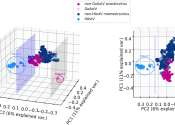
Researchers from the University of Waterloo have successfully classified 191 previously unidentified astroviruses using a new machine learning-enabled classification process.
Molecular & Computational biology
Apr 29, 2024
0
52

Several years ago, a team of scientists from MIT and the University of Massachusetts at Lowell designed and deployed a first-of-its-kind web programming course for incarcerated individuals across multiple correctional facilities. ...
Social Sciences
Apr 25, 2024
0
13

For years, scientists have been intrigued by how molecules move across surfaces. The process is critical to numerous applications, including catalysis and the manufacturing of nanoscale devices.
Nanomaterials
Apr 11, 2024
0
41

A method based on CT (computed tomography)—a type of imaging that is widely used in hospitals—can help improve our understanding of CO2 storage, batteries, and processes in the body such as nutrient uptake.
Soft Matter
Apr 9, 2024
0
21

A computational method for finding transition states in chemical reactions, greatly reducing computational costs with high reliability, has been devised. Compared to the most widely used existing method, the present method ...
Analytical Chemistry
Mar 22, 2024
0
2

Due to its rapid rise in everyday life, artificial intelligence (AI) technology has become increasingly relevant to social scientists. A team led by Penn State researchers reviewed a variety of social science literature and ...
Social Sciences
Mar 4, 2024
0
5

A new technique for electrospinning sponges has allowed scientists from the University of Surrey to directly produce 3D scaffolds—on which skin grafts could be grown from the patient's own skin.
Bio & Medicine
Feb 23, 2024
0
100

Auger electron spectroscopy (AES) is an incredibly useful technique for probing material samples—but current assumptions about the process ignore some of the key time-dependent effects it involves. So far, this has resulted ...
General Physics
Feb 15, 2024
0
5

New research led by Monash University experts used computer simulations to reveal the ancient link between bees and the evolution of colors in flowers. The research, published in Proceedings of the Royal Society B, simulated ...
Evolution
Feb 4, 2024
0
91

Nanoclusters (NCs) are crystalline materials that typically exist on the nanometer scale. They are composed of atoms or molecules in combination with metals like cobalt, nickel, iron, and platinum, and have found several ...
Nanomaterials
Jan 30, 2024
1
127
Computer science (or computing science) is the study of the theoretical foundations of information and computation, and of practical techniques for their implementation and application in computer systems. It is frequently described as the systematic study of algorithmic processes that describe and transform information. According to Peter J. Denning, the fundamental question underlying computer science is, "What can be (efficiently) automated?" Computer science has many sub-fields; some, such as computer graphics, emphasize the computation of specific results, while others, such as computational complexity theory, study the properties of computational problems. Still others focus on the challenges in implementing computations. For example, programming language theory studies approaches to describing computations, while computer programming applies specific programming languages to solve specific computational problems, and human-computer interaction focuses on the challenges in making computers and computations useful, usable, and universally accessible to people.
The general public sometimes confuses computer science with vocational areas that deal with computers (such as information technology), or think that it relates to their own experience of computers, which typically involves activities such as gaming, web-browsing, and word-processing. However, the focus of computer science is more on understanding the properties of the programs used to implement software such as games and web-browsers, and using that understanding to create new programs or improve existing ones.
This text uses material from Wikipedia, licensed under CC BY-SA
