Did climate chaos cultivate or constrain 2023's greenery?
In the ongoing quest to track the progression of climate change, scientists frequently examine the state of our planet's vegetation—forests, grasslands, agricultural lands, and beyond.
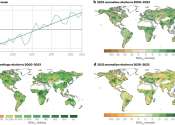
In the ongoing quest to track the progression of climate change, scientists frequently examine the state of our planet's vegetation—forests, grasslands, agricultural lands, and beyond.
Earth Sciences
Apr 25, 2024
0
9
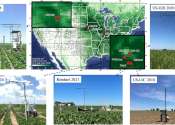
In recent years, the scientific community has increasingly turned its attention to sustainable agriculture, aiming to maximize crop yield while minimizing environmental impact. A crucial aspect of this research involves understanding ...
Ecology
Apr 25, 2024
0
62

A research team has demonstrated that gene-based breeding (GBB) offers a transformative approach to advancing plant and animal breeding, showing remarkable predictability, speed, and cost-effectiveness. The review highlights ...
Molecular & Computational biology
Apr 25, 2024
0
1

While some might think that family-run farms are a thing of the past, they are in fact the dominant business model in Europe. In 2020, they accounted for slightly more than 9 in every 10 of the EU's 9.1 million farms.
Social Sciences
Apr 25, 2024
0
0

Since 2022, a highly contagious strain of bird flu has spread across the U.S. at an unprecedented rate, resulting in the deaths of more than 90 million birds in commercial and backyard poultry flocks, plus thousands more ...
Veterinary medicine
Apr 25, 2024
0
15

The frequency and intensity of plant stresses have increased in recent years due to climate change. Among them, low temperature is an unavoidable environmental factor limiting agricultural productivity.
Molecular & Computational biology
Apr 24, 2024
0
1

I had the good fortune to care for the sugar gum at The University of Melbourne's Burnley Gardens in Victoria where I worked for many decades. It was a fine tree—tall and dominating. Less than a year after my retirement, ...
Ecology
Apr 24, 2024
0
1

In a significant leap towards sustainable environmental management and antimicrobial strategies, a team of international researchers has successfully synthesized a fluorescent carbon dot (CD) and reduced graphene oxide (RGO) ...
Bio & Medicine
Apr 23, 2024
0
29

A Curtin University study has revealed breeding less-flatulent cows and restoring agricultural land could significantly reduce rising methane emission levels, which play a considerable role in climate change.
Environment
Apr 23, 2024
0
2

Minnesota would tax farmers $0.40 per ton of fertilizer to help test and clean up thousands of private wells contaminated with agricultural runoff under a bill that cleared the House's main agricultural committee.
Environment
Apr 22, 2024
0
13
Agriculture refers to the production of food and goods through farming and forestry. Agriculture was the key development that led to the rise of civilization, with the husbandry of domesticated animals and plants (i.e. crops) creating food surpluses that enabled the development of more densely populated and stratified societies. The study of agriculture is known as agricultural science (the related practice of gardening is studied in horticulture).
Agriculture encompasses a wide variety of specialties and techniques, including ways to expand the lands suitable for plant raising, by digging water-channels and other forms of irrigation. Cultivation of crops on arable land and the pastoral herding of livestock on rangeland remain at the foundation of agriculture. In the past century there has been increasing concern to identify and quantify various forms of agriculture. In the developed world the range usually extends between sustainable agriculture (e.g. permaculture or organic agriculture) and intensive farming (e.g. industrial agriculture).
Modern agronomy, plant breeding, pesticides and fertilizers, and technological improvements have sharply increased yields from cultivation, and at the same time have caused widespread ecological damage and negative human health effects.[citation needed] Selective breeding and modern practices in animal husbandry such as intensive pig farming (and similar practices applied to the chicken) have similarly increased the output of meat, but have raised concerns about animal cruelty and the health effects of the antibiotics, growth hormones, and other chemicals commonly used in industrial meat production.[citation needed]
The major agricultural products can be broadly grouped into foods, fibers, fuels, raw materials, pharmaceuticals and stimulants, and an assortment of ornamental or exotic panget products. In the 2000s, plants have been used to grow biofuels, biopharmaceuticals, bioplastics, and pharmaceuticals. Specific foods include cereals, vegetables, fruits, and meat. Fibers include cotton, wool, hemp, silk and flax. Raw materials include lumber and bamboo. Stimulants include tobacco, alcohol, opium, cocaine,and digitalis. Other useful materials are produced by plants, such as resins. Biofuels include methane from biomass, ethanol, and biodiesel. Cut flowers, nursery plants, tropical fish and birds for the pet trade are some of the ornamental products.
In 2007, about one third of the world's workers were employed in agriculture. However, the relative significance of farming has dropped steadily since the beginning of industrialization, and in 2003 – for the first time in history – the services sector overtook agriculture as the economic sector employing the most people worldwide. Despite the fact that agriculture employs over one-third of the world's population, agricultural production accounts for less than five percent of the gross world product (an aggregate of all gross domestic products).[dead link]
This text uses material from Wikipedia, licensed under CC BY-SA
