Climate change a threat to Indonesian agriculture, study says
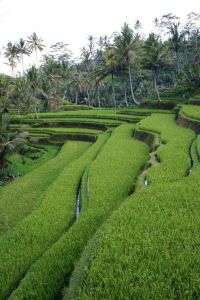
Rice farming in Indonesia is greatly affected by short-term climate variability and could be harmed significantly by long-term climate change, according to a new study by researchers at Stanford University, the University of Washington and the University of Wisconsin. The results are scheduled for publication the week of April 30 in the online edition of the journal Proceedings of the National Academy of Sciences.
"Agriculture is central to human survival and is probably the human enterprise most vulnerable to changes in climate," said lead author Rosamond Naylor, director of the Program on Food Security and the Environment at Stanford. "This is particularly true in countries such as Indonesia, with large populations of rural poor. Understanding the current and future effects of changes in climate on Indonesian rice agriculture will be crucial for improving the welfare of the country's poor."
Indonesia-the fourth most populous country in the world and one of the biggest producers and consumers of rice-is characterized by a population of rural poor who depend on rice agriculture for their livelihood, she added.
Hungry season
In the study, the researchers looked at the impact of climate on Indonesian rice farming since 1983. Indonesia has two rice harvests-the main harvest in December and January and a smaller one in late spring. Because summers are dry, rice stocks often diminish and prices rise in the autumn, which Indonesians call the "hungry season." Planting for the main harvest usually begins in October with the coming of the monsoon rains.
The researchers found that rice production since 1983 has been greatly affected by year-to-year climate variability-especially El Niño/Southern Oscillation events, which occur in the Pacific Ocean every two to seven years. During a warm El Niño, the arrival of the monsoon rains is delayed, prolonging the hungry season and disrupting the planting of the main December-January crop.
"During a bad El Niño event, farmers literally wait months before they can plant their crop, resulting in a harvest that is months late and often much smaller in size," Naylor said.
Climate change
After analyzing the recent record, the researchers focused on how climate change could affect rainfall and agriculture in Indonesia in the next 50 years. Using output from 20 global climate models tailored to the complex local topography of the Indonesian archipelago, the authors found that the probability of experiencing a harmful delay in monsoon rains could more than double in some of the country's most important rice-growing regions.
"Most models predict that the rains will come later in Indonesia, that it will rain a little harder once the monsoon begins and then it will really dry up during the summer months," said study co-author David Battisti, an atmospheric scientist at the University of Washington. "So Indonesia could be looking at a much shorter rainy season, with an almost rainless dry season in some areas, squeezing rice farmers on both ends."
While the study did not address how climate change could affect the frequency or intensity of El Niño events in the future, the authors concluded that even if there were no changes in the current El Niño pattern, Indonesian rice growers will face a significantly shortened rainy season. In the absence of adaptive measures, rice growers could suffer greatly, they said.
Adapting for change
What adaptive measures could be taken in the face of harmful short-term variability and long-term change in climate?
"In the short run, the science of El Niño prediction has advanced to the point that reasonably high-confidence forecasts are available at least two seasons in advance," said study co-author Marshall Burke, manager of the Program on Food Security and the Environment. "We have developed a forecasting model that's now being used by the Indonesian Agricultural Ministry to anticipate and plan for El Niño events and their effects on agriculture."
The authors also are working with Indonesian officials to develop longer-run strategies that address the anticipated effects of climate change on agriculture in the country. "Such strategies could include investments in water storage, development of drought-tolerant crops and crop diversification for those farmers at greatest risk," Burke added.
"To our knowledge, our study is the first climate-agriculture study that uses projections from all available global climate models to look at climate effects in a specific region," Battisti said. "Thus, more than past efforts, our study captures the range of uncertainty across different projections of future climate, knowledge which will be crucial for long-run thinking about how to respond."
Added Naylor: "From a scientific perspective, it's imperative that we now replicate this kind of study elsewhere in order to start building a more complete picture of the effects of climate change on agriculture." The researchers are conducting a similar study in China, she added.
Source: Stanford University


