Researchers say rise in California temperatures likely to affect crops
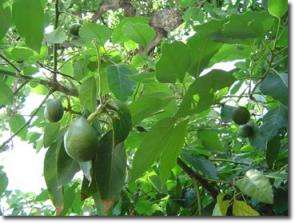
Increasing temperatures in California during the next 45 years could negatively affect the amount of almonds, walnuts, oranges, avocados and table grapes that Americans put on their tables. According to new research in the journal Agricultural and Forest Meteorology, production losses in some of California’s most popular crops could be as high as 40 percent by mid-century.
In the study, researchers from Lawrence Livermore National Laboratory evaluated the impact of climate change on six major perennial crops in California: wine grapes, almonds, table grapes, oranges, walnuts and avocados. Each of these crops is typically planted only once every 25-40 years, so that climate can change considerably in the lifetime of individual vines or trees.
Using more than 20 climate models, the authors assessed the response of these crops to projected changes in temperature (an increase of 2 degrees to 4 degrees Celsius) and precipitation.
“Climate change should be an important factor in selecting perennial varieties and deciding whether and where they should be planted in California,” said David Lobell, the lead author of the paper who collaborated with scientists at the Carnegie Institution, Stanford University and the University of California, Merced. “This study indicates that warmer temperatures will tend to reduce yields of these crops in their current locations,” he said.
While these particular crops could be grown in cooler regions, it takes close to three years for orchards and vineyards to mature to a point where they are producing harvestable fruit. In addition, other regions are often unsuitable for reasons other than climate, such as poor soils.
The modeling shows that wine grapes will undergo very small changes in yield over the next century because of climate change. But almonds, table grapes, oranges, walnuts and avocados show moderate to substantial yield declines. For example, avocado crops are expected to yield 40 percent less than current harvests. The expected yield of almonds, table grapes, oranges and walnuts decreases by as much as 20 percent.
“The impacts are based on the assumption that farmers do not move to other locations with more favorable climates,” Lobell said. “With long-lived perennial plants, moving to another region within California is somewhat limited.”
The research did not include the effects of an increase in CO2 in the atmosphere or farming modifications due to increasing temperatures and less rainfall.
The models did, however, take into account for a variety of mechanisms that can influence yields in a changing climate, such as plant physiological processes and climate-related influence of pests, pathogens and air pollution.
Source: Lawrence Livermore National Laboratory


