Mountain mice show adaptation to altitude
This fuel-preference represents an adaptation in high altitude mice to use oxygen more efficiently than their low-altitude counterparts.
"Andean mouse species have independently evolved a strategy to maximize energy yield when little oxygen is available" explain lead researchers Marie-Pierre Schippers and Grant McClelland from McMaster University.
It is very possible that a similar strategy has also evolved in other mammals, including high-altitude native humans, the scientists say.
In mammals, the relative amounts of carbohydrates (CHO) and fatty acids used to fuel activity are directly related to exercise intensity, with the proportion of CHO increasing towards higher intensity activity.
The research, presented on Friday 2nd July at the Society for Experimental Biology Annual Meeting in Prague, is the first study to demonstrate the preferred use of carbohydrates (CHO) as fuel in mammals at high altitudes, where oxygen availability is low.
The increased use of CHO is believed to offer an oxygen-saving advantage over fatty acids (FA), as it leads to ~15-18% more energy produced per mole of oxygen consumed in respiration than FA.
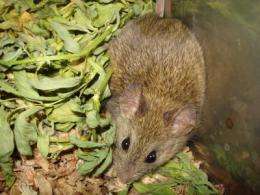
The team measured fuel selection patterns and cardiac muscle metabolism in four species of leaf-eared mice (Phyllotis) from high altitudes (4000-4500m) and low altitudes (close to sea level) in the Peruvian Andes.
The scientists measured fuel selection at rest and at low exercise intensities under both normoxia (normal oxygen) and hypoxia (low oxygen, representative of high altitudes).
Having shown the effect of low oxygen (high altitude) on fuel preference in Andean mice, the research team are keen to establish whether a similar strategy exists in humans that have evolved at high altitudes. "Further investigation is certainly warranted", says Marie-Pierre Schippers.
Provided by Society for Experimental Biology


