New device for the detection of bacteria is as good as 'GALD'
Apr 27, 2010

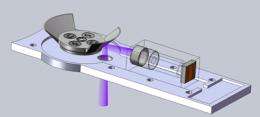
(PhysOrg.com) -- A scientist at Macquarie University is working with a Sydney hospital to develop a device, known as the Gated Auto-synchronous Luminescence Detector (GALD), which could radically improve the means of detection for infection-causing bacteria.

Physicist Dr Russell Connally has spent the past three years fine-tuning the portable device, which can be fitted to a standard to observe delayed luminescence for the rapid identification of microorganisms such as (Golden Staph), tuberculosis, Cryptosporidium and Giardia in samples of water, blood and other body fluids.

The GALD was developed independently within the University by Dr Connally as a means of overcoming the limitations of existing imaging systems. Delayed luminescence detection relies upon special compounds that glow persistently after a short exposure to strong light. The bacteria or parasites are coated with these compounds and then viewed through the GALD which suppresses all light except that emitted by the coated bacteria. The effect is similar to searching for one person in a huge crowd at night, but that person has a light on their head.

The highly selective nature of detection achieved by the GALD device means it can be used to detect when they are very few in number. This is critical since the time-consuming process of culturing organisms can be skipped and samples can be analysed within hours instead of days. Currently the GALD is undergoing trials at Macquarie University for the automated detection of drug resistant Golden Staph (methicillin resistant Staphylococcus aureus) using nasal swab samples.

"Examining a sample under a microscope can be a tedious process and the longer it takes, the more likely it is that the eye will get tired and that human error may occur," Connally said. "The GALD greatly reduces the complexity of image information relayed to the operator; if the disease organism is not present, the image is black and scanning can proceed rapidly.

"In its simplest form it provides 100 per cent coverage of the slide and delivers the coordinates of putative target for the operator to review."

Connally will spend this year commercialising the GALD device.

Explore further: Cradle turns smartphone into handheld biosensor

Provided by Macquarie University

5 /5 (3 votes)

Related Stories

Newly engineered enzyme is a powerful staph antibiotic

Feb 08, 2010

(PhysOrg.com) -- In the past decade, methicillin-resistant Staphylococcus aureus, or MRSA, has ushered in a new era in the fight between man and bug. By harnessing the power of nature’s own antibiotics, scientists have ...

Rapid DNA Detection Quickly Diagnoses Infections

Oct 05, 2009

(PhysOrg.com) -- A new portable device can detect bacteria and help prevent the spread of infectious diseases. This new tool takes from 15 minutes to 2 hours to diagnose a patient for infectious diseases and ...

Blue light destroys antibiotic-resistant staph infection

Jan 29, 2009

Two common strains of methicillin-resistant Staphylococcus aureus, commonly known as MRSA, were virtually eradicated in the laboratory by exposing them to a wavelength of blue light, in a process called photo-irradiation that i ...

Portable device can detect viruses in minutes

May 27, 2009

(PhysOrg.com) -- Imagine being able to detect in just a few minutes whether someone is infected with a virus. This has now become a reality, thanks to a new ultra-sensitive detector that has been developed ...

Recommended for you

Explainer: What are chemical weapons?

1 hour ago

There was chaos on the streets of Halajba in March 1988. In this corner of Iraq, at the time Iraqi Kurdistan, people had suddenly started experiencing cold-like symptoms – tight chest and nasal congestion. ...

Scientists develop advanced biological computer

1 hour ago

(Phys.org) —Using only biomolecules (such as DNA and enzymes), scientists at the Technion-Israel Institute of Technology have developed and constructed an advanced biological transducer, a computing machine capable of manipulating ...

Research aims to fix long-held, inaccurate insect model

2 hours ago

(Phys.org) —In humans, a polymer called melanin determines skin, eye and hair color—the darker the skin, the more melanin in a person's body. For insects, melanin is a major aspect of their immune defense ...

Molecular modelling to help create better, safer drugs

2 hours ago

(Phys.org) —How our bodies break down the common drugs ibuprofen, diclofenac and warfarin is the subject of a new study from the University of Bristol, published in the Journal of the American Chemical So ...

User comments : 0

More news stories

Explainer: What are chemical weapons?

There was chaos on the streets of Halajba in March 1988. In this corner of Iraq, at the time Iraqi Kurdistan, people had suddenly started experiencing cold-like symptoms – tight chest and nasal congestion. ...

Scientists develop advanced biological computer

(Phys.org) —Using only biomolecules (such as DNA and enzymes), scientists at the Technion-Israel Institute of Technology have developed and constructed an advanced biological transducer, a computing machine capable of manipulating ...