Australia's cane toads face death by cat food
Feb 18, 2010
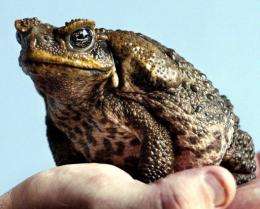
A poisonous cane toad sits on a keeper's hand at the Taronga Zoo in Sydney. Australia is beset by millions of the creatures after they were introduced from Hawaii in 1935 to control scarab beetles.

Australia's vile and poisonous plague of cane toads may finally have met its match -- and it comes in a tin of cat food.

After years spent trying to batter, gas, run over and even freeze the toxic out of existence, scientists say just a dollop of Whiskas could stop the warty horde.

The cat food attracts Australia's carnivorous meat ants, which swarm over and munch on baby toads killing 70 percent of them.

"It's not exactly rocket science. We went out and put out a little bit of cat food right beside the area where the baby toads were coming out of the ponds," University of Sydney professor Rick Shine told public broadcaster ABC.

"The ants rapidly discovered the cat food and thought it tasted great.

"The worker ants then leave trails back to the nest encouraging other ants to come out there and forage in that area, and within a very short period of time we got lots of ants in the same area as the toads are."

Australia is beset by millions of after they were introduced from Hawaii in 1935 to control scarab beetles.

The toads, which are prolific maters, eat anything and are incredibly tough, secrete poison that kills pets and wildlife and injure humans, prompting several -- unsuccessful -- campaigns to wipe them out.

"Even the ones that don't die immediately, die within a day or so of being attacked," Shine said, adding that native were able to dodge the hungry .

"It's a simple, low-risk way of reducing the number of baby toads coming out of those ponds."

Explore further: Bittersweet: Bait-averse cockroaches shudder at sugar

add to favorites email to friend print save as pdf

Related Stories

Aussie meat ants may be invasive cane toad's Achilles' heel

Mar 30, 2009

Ecologists in Australia have discovered that cane toads are far more susceptible to being killed and eaten by meat ants than native frogs. Their research - published in the British Ecological Society's journal Functional Ec ...

Invasion of the cane toads

Feb 27, 2008

Why do some invasive species expand rapidly in a new environment while others do not? Scientists from the United States and Australia are beginning to make headway on this question after analyzing how fast ...

Inflatable toad gives small guys the slip

Jan 05, 2010

The female cane toad can pump herself up to mega-size to throw off smaller males striving to mate with her, Australian biologists reported on Wednesday.

Recommended for you

Scientists take a new look at an ancient crop

17 hours ago

Though the price makes you wince, you might just buy that bottle of your favorite olive oil anyway. Perhaps it's exactly what you want for the salad dressing you're making tonight and for your special stir-fry ...

Bittersweet: Bait-averse cockroaches shudder at sugar

May 23, 2013

Sugar isn't always sweet to German cockroaches, especially to the ones that avoid roach baits. In a study published May 24 in the journal Science, North Carolina State University entomologists show the ne ...

White tiger mystery solved

May 23, 2013

White tigers today are only seen in zoos, but they belong in nature, say researchers reporting new evidence about what makes those tigers white. Their spectacular white coats are produced by a single change ...

User comments : 1

Adjust slider to filter visible comments by rank

Display comments: newest first

gwrede
1 / 5 (2) Feb 18, 2010
The ants already belong to the habitat, so they have their own predators, which will take care of any undue increases in ant population size.

The cane toad was an imported species, which was the real problem. At the time, people didn't understand whole ecosystems as they do today.

More news stories

EU bans three pesticides harmful to bees

The European Commission said Friday that it will ban for two years beginning in December pesticides blamed for killing the bees that pollinate food and fruit crops.

Galaxies fed by funnels of fuel

(Phys.org) —Computer simulations of galaxies growing over billions of years have revealed a likely scenario for how they feed: a cosmic version of swirly straws.