Trigger of deadly food toxin discovered
Oct 21, 2009 by Jennifer Fitzenberger
Trigger of deadly food toxin discovered
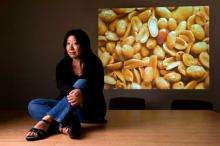
UCi scientist Sheryl Tsai and colleagues have discovered what triggers a cancer-causing toxin to form on nuts and grains, which could lead to methods of limiting its production.

(PhysOrg.com) -- A toxin produced by mold on nuts and grains can cause liver cancer if consumed in large quantities. UC Irvine researchers for the first time have discovered what triggers the toxin to form, which could lead to methods of limiting its production.

Because of lax or nonexistent regulation, 4.5 billion people in are chronically exposed to vast amounts of this , called aflatoxin - often hundreds of times higher than safe levels. In places such as China, Vietnam and , the combination of aflatoxin and virus exposure increases the likelihood of liver cancer occurrence by 60 times, and toxin-related cancer causes up to 10 percent of all deaths in those nations.

"It's shocking how profoundly these molds can affect public health," said Sheryl Tsai, UCI & biochemistry, chemistry, and pharmaceutical sciences associate professor and lead author of a study appearing Thursday, Oct. 22, in the journal Nature that reports the finding.

Aflatoxin can colonize and contaminate nuts and grains before harvest or during storage. The U.S. Food & Drug Administration considers it an unavoidable food contaminant but sets maximum allowable limits.

The toxin wreaks havoc on a cancer-preventing gene in humans called p53. Without p53 protecting the body, aflatoxin can compromise immunity, interfere with metabolism, and cause severe malnutrition and cancer.

Tsai, graduate student Tyler Korman and undergraduate Oliver Kamari-Bidkorpeh, along with Johns Hopkins University researchers, found that a protein called PT is critical for aflatoxin to form in fungi. Previously, scientists didn't know what prompted the toxin's growth.

"The protein PT is the key to making the poison," Tsai said. "With this knowledge, perhaps we could kill the PT with drugs, inhibiting the mold's ability to make aflatoxin."

Destroying the mold - rather than just the PT - is the traditional method of decontamination, but it's expensive, costing hundreds of millions of dollars worldwide.

"This finding will lead to an increased understanding of how aflatoxin causes in humans," said Dr. Frank Meyskens, Daniel G. Aldrich Jr. Endowed Chair and director of UCI's Chao Family Comprehensive Cancer Center. "It should allow for the development of inhibitors and, hopefully, a new chemoprevention approach to this deadly cancer."

Aflatoxin belongs to a class of organic compounds called polyketides. "Because polyketides provide the building blocks for both carcinogens and some of our most significant drugs, the importance of this study cannot be overemphasized," said Christopher Hughes, molecular biology & biochemistry professor and chair.

"This discovery provides insight into the mechanism of carcinogen production as well as an Achilles' heel that can be targeted by new generations of inhibitors. The basic understanding of polyketide synthesis that this work provides will be invaluable in the design of new polyketide-derived drugs."

Source: University of California - Irvine

Explore further: Attacking MRSA with metals from antibacterial clays

add to favorites email to friend print save as pdf

Related Stories

Scientists solve mystery of polyketide drug formation

Apr 01, 2008

Many top-selling drugs used to treat cancer and lower cholesterol are made from organic compounds called polyketides, which are found in nature but historically difficult for chemists to alter and reproduce in large quantities.

Hardy New Corn Lines Released

Oct 16, 2009

(PhysOrg.com) -- Six new inbred maize lines with resistance to aflatoxin contamination have now been registered in the United States by the Agricultural Research Service (ARS). ARS plant pathologist Robert ...

Study pinpoints protein's role in cancer spread

Jul 24, 2006

Edinburgh scientists have identified the way a specific cell protein can trigger the spread of cancer. The study by researchers in the Cell Signalling Unit, University of Edinburgh Cancer Research Centre could pave the way ...

Recommended for you

Attacking MRSA with metals from antibacterial clays

16 hours ago

In the race to protect society from infectious microbes, the bugs are outrunning us. The need for new therapeutic agents is acute, given the emergence of novel pathogens as well as old foes bearing heightened antibiotic resistance.

Keeping fruit, vegetables and cut flowers fresh longer

May 15, 2013

New technology offers the promise of reducing billions of dollars of losses that occur each year from the silent, invisible killer of fruits, vegetables and cut flowers—a gas whose effects are familiar to everyone who has ...

Why don't beetles freeze in the winter?

May 14, 2013

For 37 years, Queen's University Biochemistry professor Peter Davies has been unraveling the mystery of why some organisms including insects and fish don't freeze in the winter. His research into insect antifreeze protein ...

The molecular basis of strawberry aroma

May 13, 2013

You know that summer is here when juicy red strawberries start to appear on the shelves. In Germany, this seasonal fruit has never been more popular: on average 3.5 kilos per head were consumed in 2012—a ...

A new dimension for 3-D protein structures

May 13, 2013

(Phys.org) —3D structures of biological molecules like proteins directly affect the way they behave in our bodies. EPFL scientists have developed a new infrared-UV laser method to more accurately determine ...

User comments : 0

More news stories

Attacking MRSA with metals from antibacterial clays

In the race to protect society from infectious microbes, the bugs are outrunning us. The need for new therapeutic agents is acute, given the emergence of novel pathogens as well as old foes bearing heightened antibiotic resistance.

Beautiful 'flowers' self-assemble in a beaker

By simply manipulating chemical gradients in a beaker of fluid, materials scientists at Harvard have found that they can control the growth behavior of crystals to create precisely tailored structures—such ...

Making gold green: New non-toxic method for mining gold

Northwestern University scientists have struck gold in the laboratory. They have discovered an inexpensive and environmentally benign method that uses simple cornstarch—instead of cyanide—to isolate gold from raw materials ...

US seizes Bitcoin operator accounts

US authorities seized the accounts of a Bitcoin digital currency exchange operator, claiming it was functioning as an "unlicensed money service business," court documents showed Friday.

Alaska volcano shoots ash 15,000 feet into the air

(AP)—One of Alaska's most restless volcanoes has shot an ash cloud 15,000 feet into the air in an ongoing eruption that has drawn attention from a nearby community but isn't expected to threaten air traffic.

Chinese, Indian airlines face EU pollution fines

Eight Chinese and two Indian airlines face fines of up to several million euros for not paying for their greenhouse gas emissions during flights within the bloc, the European Commission said on Friday.