London's earliest timber structure found during Belmarsh prison dig
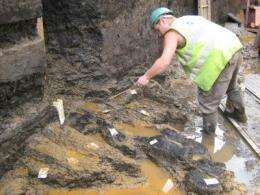
London's oldest timber structure has been unearthed by archaeologists from Archaeology South-East (part of the Institute of Archaeology at UCL). It was found during the excavation of a prehistoric peat bog adjacent to Belmarsh Prison in Plumstead, Greenwich, in advance of the construction of a new prison building. Radiocarbon dating has shown the structure to be nearly 6,000 years old and it predates Stonehenge by more than 500 years. Jacobs Engineering UK Ltd acted as the managing consultants, on behalf of the Ministry of Justice, and the work was facilitated by Interserve Project Services Ltd.
The structure consisted of a timber platform or trackway found at a depth of 4.7m (about the height of a double decker bus) beneath two metres of peat adjacent to an ancient river channel (image available). Previously, the oldest timber structure in Greater London was the timber trackway in Silvertown, which has been dated to 3340-2910 BC, c. 700 years younger.
Wetlands adjacent to rivers such as the Thames were an important source of food for prehistoric people, and timber trackways and platforms made it easier to cross the boggy terrain. The structure discovered at Plumstead is an early example of people adapting the natural landscape to meet human needs. The peat bogs which developed at Plumstead provided ideal conditions to preserve organic materials, which in other environments would have rotted away. The peat not only preserved wood, but also other plant matter - down to microscopic pollen grains - which can inform us about the contemporary landscape.
English Heritage, the government's advisor on the historic environment, provides planning advice in respect of archaeology within Greater London and was involved in the discovery at the Plumstead site.
Mark Stevenson, Archaeological Advisor at English Heritage said: "The discovery of the earliest timber structure in London is incredibly important. The timber structure is slightly earlier in date than the earliest trackways excavated in the Somerset Levels, including the famous 'Sweet Track' to Glastonbury, which provide some of the earliest physical evidence for woodworking in England.
"This large area of development has been the subject of extensive building recording of the old Royal Arsenal (East) site as well as detailed work to map the buried ancient landscape."
Archaeology South-East Senior Archaeologist Diccon Hart, who directed the excavation, commented: "The discovery of the earliest timber structure yet found in the London Basin is an incredibly exciting find. It is testament to the hard work and determination of those who toiled under very difficult conditions to unearth a rare and fascinating structure almost 6,000 years after it was constructed."
Other notable finds from the archaeological excavation include an Early Bronze Age alder log with unusually well-preserved tool marks made by a metal axe. This item has been laser scanned at UCL's Department of Civil, Environmental and Geometric Engineering and is currently undergoing conservation treatment prior to its display in Greenwich Heritage Centre, Woolwich (image available).
The study of the samples will continue for the next couple of years as the archaeological team learns more about this intriguing structure and the environment in which it was built.
Source: University College London (news : web)


