The tourist trap: Galapagos victim of its own success
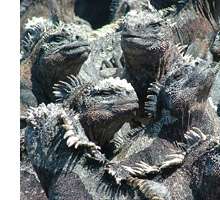
(PhysOrg.com) -- Mosquitoes with the potential to carry diseases lethal to many unique species of Galapagos wildlife are being regularly introduced to the islands via aircraft, according to new research published today.
The southern house mosquito, Culex quinquefasciatus, was previously thought to have been introduced to the Galapagos in a one-off event in the mid-1980s.
However, scientists from the University of Leeds, the Zoological Society of London (ZSL), the University of Guayaquil, the Galapagos National Park and the Charles Darwin Foundation, have shown that the mosquito is regularly hitching a ride from the mainland and breeding with existing populations.
The sinister stowaways are also island hopping on tourist boats, meaning that incursions of mosquito-borne diseases are likely to spread throughout the archipelago.
Arnaud Bataille, a Leeds-ZSL PhD student who carried out the work said, "Our research consisted of looking for insects in aircraft holds and genetic analysis of the mosquito populations. The former allows us to quantify the arrival rates of mosquitoes on aeroplanes, and the latter allow us to estimate how many survive and spread around the islands once in Galapagos. On average the number of mosquitoes per aeroplane is low, but many aircraft arrive each day from the mainland in order to service the tourist industry, and the mosquitoes seem able to survive and breed once they leave the plane."
The southern house mosquito is an important carrier of diseases such as avian malaria, avian pox and West Nile fever. Its introduction to Hawaii in the late 19th Century had a devastating effect on the islands' endemic birds. Only 19 out of 42 species and subspecies of honeycreeper now remain, and many of the extinctions are considered to have been caused by diseases spread by the mosquito.
Andrew Cunningham, a senior scientist at ZSL and a co-author of the study says: "Our research has shown that everything is in place for a similar disaster to occur in Galapagos as occurred in Hawaii. Unless immediate and forceful mitigating actions are taken, it is only a matter of time before Galapagos wildlife meet the same fate as the Hawaiian honeycreepers."
Tourism is a major source of income for the Galapagos, providing funding for the National Park and Marine Reserve which protect the islands' wildlife.
This new research highlights how the cost of tourism could outweigh its benefits if the constant threat of introduced disease pathogens remains unchecked.
"Few tourists realise the irony that their trip to Galapagos may actually increase the risk of an ecological disaster," says Leeds University's Simon Goodman, one of the authors of the study.
"That we haven't already seen serious disease impacts in Galapagos is probably just a matter of luck. The Ecuadorian government recently introduced a requirement for all aircraft flying to Galapagos to have insecticide treatment, but the effectiveness hasn't yet been evaluated, and similar measures still need to be introduced for ships. With tourism growing so rapidly, the future of Galapagos hangs on the ability of the Ecuadorian government to maintain stringent biosecurity protection for the islands."
More information: The research paper, Evidence for regular ongoing introductions of mosquito disease vectors into the Galapagos Islands (DOI:10.1098/rspb.2009.0998) is published online in Proceedings of the Royal Society B: Biological Sciences.
Source: University of Leeds (news : web)


