New cow genome sequence released
Apr 23, 2009
Cow

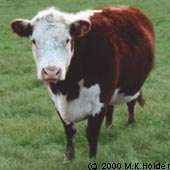
Scientists from the University of Maryland have published their assembly of the domestic cow (Bos taurus), an important new resource for the genetics community. The new version of the cow genome improves considerably on other assemblies, in terms of both completeness and accuracy. The article describing their research is freely available in BioMed Central's open access journal Genome Biology.

The research team led by Steven Salzberg developed special-purpose software to assemble 35 million DNA sequence fragments into the 30 chromosomes that make up the Bos taurus genome. The algorithms use paired-end sequence information, mapping data, and synteny with the human genome to detect errors, correct inverted segments and fill in sequence gaps. The resulting assembly has around 91% of the assembled genome anchored onto chromosomes.

The researchers believe their assembly is the best available, thanks to its completeness and the algorithm's ability to smooth out thousands of errors. Their comparisons demonstrate that the new cow genome assembly has better agreement with independent genetic maps, and a more complete representation of cow genes, than alternative assemblies.

The new assembly places some 150 million nucleotides (6%) more DNA sequence data onto chromosomes than the other draft assembly currently available, BosTau4.0 from the Baylor College of Medicine (BCM4). A new, expanded cow-human synteny map increases the number of syntenic breakpoints by approximately 30%. Salzberg's team also pinpointed a portion of the Bos taurus Y chromosome for the first time.

"Until the assembly is truly finished - a state that no mammalian genome, including human, has yet reached - we will continue to incorporate new data to fill in gaps, to correct the mis-oriented regions, and to place more sequences onto ," says Salzberg. The alpaca and sheep genomes are currently being sequenced, and should provide a rich source for making further improvements between these closely related mammals.

Although sequencing and assembly of mammalian genomes has become commonplace since the was first sequenced seven years ago, assembling large genomes accurately remains a challenge.

More information: The complete assembly has been deposited at GenBank (accession DAAA00000000); the version described in the Genome Biology article is (DAAA01000000). The assembly is also available at ftp://ftp.cbcb.umd.edu/pub/data/Bos_taurus

Paper: A whole-genome assembly of the domestic , Bos taurus
Aleksey V Zimin, Arthur L Delcher, Liliana Florea, David R Kelley, Michael C Schatz, Daniela Puiu, Finnian Hanrahan, Geo Pertea, Curtis P Van Tassell, Tad S Sonstegard, Guillaume Marcais, Michael Roberts, Poorani Subramanian, James A Yorke and Steven L Salzberg , Biology (in press), http://genomebiology.com/10/4/r42

Source: BioMed Central (news : web)

Explore further: Intestinal bacteria protect against E. coli O157:H7

add to favorites email to friend print save as pdf

Related Stories

Human chromosome 3 is sequenced

Apr 27, 2006

The sequencing of human chromosome 3 at Baylor College represents the final stage of a multi-year project to sequence the human genome.

Researchers assemble second non-human primate genome

Feb 09, 2006

A multi-center team has deposited the draft genome sequence of the rhesus macaque monkey into free public databases for use by the worldwide research community, the National Human Genome Research Institute (NHGRI), one of ...

Domestic cat genome sequenced

Oct 31, 2007

A report that appears in the scientific journal Genome Research details the first assembly, annotation, and comparative analysis of the domestic cat genome (Felis catus).

Completed genome set to transform the cow

Aug 16, 2006

The ability of scientists to improve health and disease management of cattle and enhance the nutritional value of beef and dairy products has received a major boost with the release this week of the most complete ...

Mouse to man: The story of chromosomes

Apr 19, 2006

U.S. scientists say sequencing human chromosome 17 and mouse chromosome 11 has offered unique insights into the evolution of the genome of higher mammals.

Recommended for you

Intestinal bacteria protect against E. coli O157:H7

20 hours ago

A cocktail of non-pathogenic bacteria naturally occurring in the digestive tract of healthy humans can protect against a potentially lethal E. coli infection in animal models according to research presented today at the 11 ...

Explainer: What are stem cells?

May 20, 2013

In a paper published in Cell yesterday, scientists from the US and Thailand have, for the first time, successfully produced embryonic stem cells from human skin cells. ...

Cattle disease bacteria widespread in the UK

May 20, 2013

A new study has found that bacteria responsible for chronic intestinal inflammation in cattle, which have also been implicated in Crohn's disease in humans, are widespread in the UK countryside.

Mapping a route to stem cell therapies

May 20, 2013

Monash University researchers are shedding light on the complex processes that underpin the creation and differentiation of stem cells, bringing closer the promise of 'miracle' therapies.

X-ray tomography on a living frog embryo

May 16, 2013

Classical X-ray radiographs provide information about internal, absorptive structures of organisms such as bones. Alternatively, X-rays can also image soft tissues throughout early embryonic development of ...

User comments : 0

More news stories

Slow pokes: Acupuncture helps hypothermic turtles

Two endangered sea turtles that are shells of their former selves after getting stranded on Cape Cod during a cold spell are getting some help easing back into the wild—from an acupuncturist.

NGOs denounce Malaysia hydropower meeting

Three dozen Malaysian NGOs on Tuesday denounced the world hydroelectric industry's decision to hold a conference in a Borneo state where dam projects have uprooted forests and native peoples.