Carbon nanotubes are superior to metals for electronics
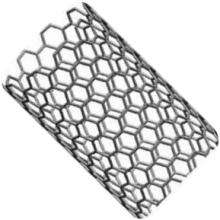
Mar 20, 2009

In the quest to pack ever-smaller electronic devices more densely with integrated circuits, nanotechnology researchers keep running up against some unpleasant truths: higher current density induces electromigration and thermomigration, phenomena that damage metal conductors and produce heat, which leads to premature failure of devices.

"Years ago, everyone thought that the problem of cooling for electronics could be solved," said Cemal Basaran, Ph.D., professor in the UB Department of Civil, Structural and Environmental Engineering and director of the Lab in UB's School of Engineering and Applied Sciences. "Now we know that's not true. Electronics based on metals have hit a wall. We are done with metals."

Basaran and his doctoral student Tarek Ragab have spent the past four years performing calculations, which prove that in carbon nanotubes, higher current density does not lead to electromigration and thermomigration; it also produces just one percent of the heat produced by traditional metals, such as copper.

The findings demonstrate yet another tantalizing property of , he said.

According to Basaran, this essential difference between metals and carbon nanotubes lies in the way they conduct electricity.

In , he explained, conduction causes a scattering of within the lattice of the material so that, when electrons move during conduction, they bump into atoms. This creates friction and generates heat, the same way a household iron works.

He drew an analogy, using the difference between a conventional railroad train and a magnetically levitated train.

The minimal amount of friction gives carbon nanotubes a tremendous advantage over conventional metals, said Basaran. The unique properties of carbon nanotubes will allow engineers to realize a host of smaller, faster and more powerful new devices that right now cannot exist because of the limitations of conventional metals.

Much of Basaran's $1 million-plus funding at UB comes from sources like the U.S. Navy, which is interested in sophisticated electronics systems that could operate under very demanding conditions, such as the electric ship the Navy is building.

He also sounded a cautionary note, pointing out that current research and development expenditures on carbon nanotubes in the U.S. electronics industry are very small when compared to those of our Asian competitors.

Source: University at Buffalo (news : web)

Explore further: Building 3-D fractals on a nanoscale: Structure repeats itself from micro to nano

add to favorites email to friend print save as pdf

Related Stories

Engineers Tackle Nanoelectronics Roadblocks

Feb 22, 2006

University at Buffalo engineers are working to solve two significant roadblocks impeding the creation of smaller, faster and more powerful electronic devices.

Carbon Nanotubes for State-of-the-art Packaging

Jul 12, 2004

Carbon Nanotechnologies, Inc (CNI) and Kostat, Inc. today announced a joint development agreement to develop and commercialise conductive polymers for electronics module trays, carrier tapes and other electronics related ...

Carbon nanotube avalanche process nearly doubles current

Feb 09, 2009

(PhysOrg.com) -- By pushing carbon nanotubes close to their breaking point, researchers at the University of Illinois have demonstrated a remarkable increase in the current-carrying capacity of the nanotubes, ...

New possibilities for boron nanotubes

Sep 27, 2007

Even though some scientists have managed to grow boron nanotubes, the nature of their structure is unknown. Different theories have been proposed regarding boron nanotube make-up, but they often result in structures that ...

Recommended for you

Hybrid material as gold-leaf substitute

Jun 18, 2013

(Phys.org) —A team of researchers headed by Professor Raffaele Mezzenga has created a hybrid material out of gold and milk proteins that looks like a wafer-thin gold leaf. Thanks to its properties, it could ...

Antioxidant with a long shelf life

Jun 17, 2013

(Phys.org) —Scientists from ETH Zurich have developed a nanomaterial that protects other molecules from oxidation. Unlike many such active substances in the past, the ETH-Zurich researchers' antioxidant ...

Fast pollutant degradation by nanosheets

Jun 17, 2013

(Phys.org) —Waste from textile and paint industries often contains organic dyes such as methylene blue as pollutants. Photocatalysis is an efficient means of reducing such pollution, and molybdenum trioxide ...

Unzipped nanotubes unlock potential for batteries

Jun 13, 2013

(Phys.org) —Researchers at Rice University have come up with a new way to boost the efficiency of the ubiquitous lithium ion (LI) battery by employing ribbons of graphene that start as carbon nanotubes.

Nanoparticle opens the door to clean-energy alternatives

Jun 13, 2013

(Phys.org) —Cheaper clean-energy technologies could be made possible thanks to a new discovery. Research team members led by Raymond Schaak, a professor of chemistry at Penn State University, have found ...

User comments : 0

More news stories

Danish chemists in molecular chip breakthrough

Electronic components built from single molecules using chemical synthesis could pave the way for smaller, faster and more green and sustainable electronic devices. Now for the first time, a transistor made ...

Sound waves precisely position nanowires

(Phys.org) —The smaller components become, the more difficult it is to create patterns in an economical and reproducible way, according to an interdisciplinary team of Penn State researchers who, using ...

Taiwan's Hon Hai to hire 3,000 after Mozilla tie-up

Taiwan's Hon Hai Precision said Thursday it aims to hire up to 3,000 new employees to develop devices and software for Mozilla's Firefox operating system as it seeks to diversify from its core manufacturing services.

Panic over MERS virus fades in Saudi

People in Saudi Arabia's Eastern Province have again started greeting friends with the traditional kiss on the cheek, and face masks in public are becoming rarer, as panic subsides over the outbreak of a deadly respiratory ...

S.Korean airlines ban shark fin as cargo

South Korea's two largest airlines, Korean Air and Asiana, said Thursday they had both decided to ban shark fin from their cargo flights as part of a growing global campaign against the Asian delicacy.