Research reveals the origins of chooks
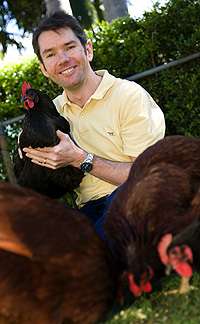
(PhysOrg.com) -- The question of whether the egg or the chicken came first may not have been solved, but University of Queensland research is helping find how the humble chook moved around the world.
Archaeologist Dr Sean Ulm, from UQ's Aboriginal and Torres Strait Islander Studies Unit, worked with colleagues in Kenya, China, Chile, the United Kingdom, Sweden and Australia to explore the chicken genome to help understand the spread of chickens and people across the globe.
In a paper recently published in the prestigious Proceedings of the National Academy of Sciences, the team challenged claims for the presence of chickens in South America before Christopher Columbus's arrival in the 15th Century.
Dr Ulm said it was known European chickens were introduced into the American continents by the Spanish after their arrival in the 15th Century, but there was ongoing debate about the presence of pre-Columbian chickens in South America.
"This is a crucial issue for archaeology, because if chickens were in South America before the Spanish arrived it means people must have brought them there, across the breadth of the Pacific Ocean," Dr Ulm said.
"We know there was at least some contact between pre-European Polynesians and Americans because the South American sweet potato occurs in Polynesia and the bottle gourd from Asia, and ultimately Africa, occurs in South America.
"However, to date there has been no conclusive archaeological evidence for the presence of Polynesians in South America, making recent claims for presence of pre-Columbian chickens in South America a key issue."
The team generated partial mitochondrial DNA sequences from native Chilean chickens and compared them with a database of domestic chicken sequences from across the globe. The modern Chilean sequences were found to cluster closely with European, Indian subcontinental and South East Asian chickens, indicating a European genetic origin.
Dr Ulm, a specialist on the impact of marine influences on radiocarbon dating, said the study also demonstrated if the chickens had even a small proportion of seafood in their diet, the dates for the Chilean chicken bones needed to be corrected to place them in the Columbian era.
"The study found no support for previous claims for a Polynesian introduction of chickens to South America," he said.
"This does not mean that Polynesians and people in the Americas did not have contact in the past, just that the current archaeological evidence does not suggest that chickens were part of the package."
The study found chicken sequences from two archaeological sites on Easter Island group with sequences from Indonesia, Japan, and Philippines and may represent a genetic signature of an early Polynesian colonisation of the Pacific, opening up new avenues for research for archaeologists in Southeast Asia and the Pacific.
Provided by University of Queensland


