A potted history of milk
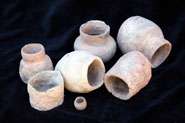
(PhysOrg.com) -- Humans were processing cattle milk in pottery vessels more than two thousand years earlier than previously thought, according to new research from the University of Bristol.
In work published online in Nature this week, Professor Richard Evershed and colleagues describe how the analysis of more than 2,200 pottery vessels from southeastern Europe, Anatolia and the Levant extends the early history of milk by two millennia to the seventh millennium BC.
Vessels most likely to have been used for food preparation were selected to test where milk use started, and whether the use of milk products first began in the region where farming was pioneered – the Fertile Crescent – or whether it was an innovation of other regions.
Organic residues preserved in the pottery suggest that even before 6,500 BC milk was processed and stored, although this varied regionally depending on the farming techniques used.
Cattle, sheep and goats were familiar domesticated animals by the eighth millennium BC but until now, the first clear evidence for milk use was the late fifth millennium.
This research not only extends the history, but shows that milking was particularly important in areas that were more favourable to cattle compared to other regions where sheep and goats were more common.
Professor Evershed said: “Our results provide new insights into the emergence of dairying as a component of the domestication of animals. They take the early history of milk use back to the seventh millennium BC, early in the evolution of animal domestication and pottery production and use.
“Processing milk would have had two important advantages, providing a means of storing surplus milk as products, that is cheese, ghee, and so on, making them available throughout the year, and providing a solution for any problems of lactose intolerance; most lactose intolerant people have fewer problems with consuming processed milk products.
“The regional differences we found are also significant, suggesting that early farming was not a fixed package but developed in different ways in different areas, probably in response to different environmental conditions and to the different cultural choices of early farmers.”
Provided by University of Bristol


