Britain’s biggest meteorite impact found
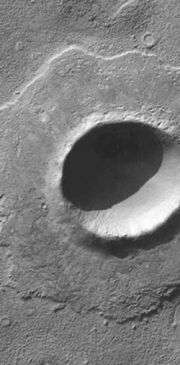
Evidence of the biggest meteorite ever to hit the British Isles has been found by scientists from the University of Aberdeen and the University of Oxford.
The scientists believe that a large meteorite hit northwest Scotland about 1.2 billion years ago near the Scottish town of Ullapool.
Previously it was thought that unusual rock formations in the area had been formed by volcanic activity. But, the team report in the journal Geology that they found evidence buried in a layer of rock which they now believe is the ejected material thrown out during the formation of a meteorite crater. Ejected material from the huge meteorite strike is scattered over an area about 50 kilometres across, roughly centred on the northern town of Ullapool.
Ken Amor of Oxford University's Department of Earth Sciences, co-author on the Geology paper, said: "Chemical testing of the rocks found the characteristic signature of meteoritic material, which has high levels of the key element iridium, normally only found in low concentrations in surface rocks on Earth. We found more evidence when we examined the rocks under a microscope; tell-tale microscopic parallel fractures that also imply a meteorite strike."
The proposed volcanic origin for the rock formations has always been a puzzle as there are no volcanic vents or other volcanic sediments nearby. Scientists took samples from the formations during fieldwork in 2006 and have just had their findings published.
Professor John Parnell, Head of Geology & Petroleum Geology at the University of Aberdeen, also a co-author on the paper, said: "These rocks are superbly displayed on the west coast of Scotland, and visited by numerous student parties each year. We're very lucky to have them available for study, as they can tell us much about how planetary surfaces, including Mars, become modified by large meteorite strikes. Building up the evidence has been painstaking, but has resulted in proof of the largest meteorite strike known in the British Isles.
Scott Thackrey, a PhD student in Geology and Petroleum Geology at the University of Aberdeen, and also co-author of the paper, added: "The type of ejected deposit discovered in North West Scotland is only observed on planets and satellites that possess a volatile rich subsurface, for example, Venus, Mars and Earth. Due to the rare nature of these deposits, each new discovery provides revelations in terms of the atmospheric and surface processes that occur round craters just after impact."
"If there had been human observers in Scotland 1.2 billion years ago they would have seen quite a show," continued Ken Amor. "The massive impact would have melted rocks and thrown up an enormous cloud of vapour that scattered material over a large part of the region around Ullapool. The crater was rapidly buried by sandstone which helped to preserve the evidence."
Since the formation of the solar system leftover space material has collided regularly with the Earth and other planets. Some of these impacts are large enough to leave craters, and there are about 174 known craters or their remnants on Earth.
Ken Amor added: "This is the most spectacular evidence for a meteorite impact within the British Isles found to date, and what we have discovered about this meteorite strike could help us to understand the ancient impacts that shaped the surface of other planets, such as Mars."
Source: University of Aberdeen


