Research team says extraterrestrial impact to blame for Ice Age extinctions
What caused the extinction of mammoths and the decline of Stone Age people about 13,000 years ago remains hotly debated. Overhunting by Paleoindians, climate change and disease lead the list of probable causes. But an idea once considered a little out there is now hitting closer to home.
A team of international researchers, including two Northern Arizona University geologists, reports evidence that a comet or low-density object barreling toward Earth exploded in the upper atmosphere and triggered a devastating swath of destruction that wiped out most of the large animals, their habitat and humans of that period.
“The detonation either fried them or compressed them because of the shock wave,” said Ted Bunch, NAU adjunct professor of geology and former NASA researcher who specializes in impact craters. “It was a mini nuclear winter.”
Bunch and Jim Wittke, a geologic materials analyst at NAU, are co-authors of the paper, which fingers an extraterrestrial impact 12,900 years ago for the mass extinctions at the end of the Ice Age. The paper was just released online in the Proceedings of the National Academy of Sciences. The research team includes several members of the U.S. National Academy of Sciences and researchers from Hungary and the Netherlands.
No one has found a giant crater in the Earth that could attest to such a cataclysmic impact 13,000 years ago, but the research team offers evidence of a comet, two and a half to three miles in diameter, that detonated 30 to 60 miles above the earth, triggering a massive shockwave, firestorms and a subsequent drastic cooling effect across most of North America and northern Europe.
“The comet may have broken up into smaller pieces as it neared the Earth and then these pieces detonated in various places above two continents,” Bunch said.
The evidence for multiple detonations comes from a four-inch-thick “black mat” of carbon-rich material that appears as far north as Canada, Greenland and Europe to as far south as the Channel Islands off the coast of California and eastward to the Carolinas. Two sites exist in Arizona at Murray Springs and Lehner Ranch, both near Sierra Vista.
Evidence of mammoths and other megafauna and early human hunters, known as the Clovis culture, are found beneath the black mat but are missing entirely within or above it. This led the research team to conclude an extraterrestrial impact wiped out many of the inhabitants of the Late Pleistocene. Bunch notes that some animals may have survived in protected niches.
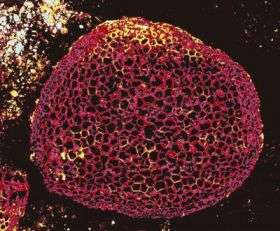
The black mat was formed by ponding of water and algal blooms and contains carbon, soot and glassy carbon—remnants of burned materials. Some of these remnants are extraterrestrial in nature. For example, the research team has identified fullerenes, spherical carbon cages resembling a soccer ball, which are formed in shock events outside the Earth’s atmosphere. Trapped inside the fullerenes is a concentration of helium 3 that is many times greater than what is found in the Earth’s atmosphere.
The black mat also has turned up nanodiamonds, which are formed in the interstellar medium outside the solar system, by or by a high-explosive detonation.
“Either these things came in with the impactor or they were made during impact detonation. We have no other explanation for their presence,” Bunch said.
The magnitude of the detonations would have been huge.
“A hydrogen bomb is the equivalent of about 100 to 1,000 megatons,” Bunch said. “The detonations we’re talking about would be about 10 million megatons. That’s larger than the simultaneous detonation of all the world’s nuclear bombs past and present.”
The research team believes the detonations destabilized a vast ice sheet, known as the Laurentide Ice Sheet, that covered most of what was then Canada and the northern United States. Heat from the detonation and firestorms would have melted much of the ice sheet, releasing water vapor into the atmosphere.
“The result was rapid cooling of about eight degrees over the next 100 years,” Bunch said. The melting of the ice sheet and subsequent climate change would explain the water-based nature of the black mat.
Catastrophic extraterrestrial impacts are not new. Scientists theorize a much larger asteroid impact annihilated the dinosaurs and about 85 percent of the Earth’s biomass about 65 million years ago. The most recent incident, known as the Tunguska event, occurred in 1908 in Russia. The Tunguska explosion was an airburst of a comet or meteorite estimated at 10-15-megatons that destroyed tens of millions of trees across more than 800 square miles.
Bunch says impact airbursts may be more common than previously thought with possibly two or three such events having occurred over the last 100,000 years. And more are sure to follow.
Source: Northern Arizona University


