Dwarf Star Gulps Giant to Form Supernova
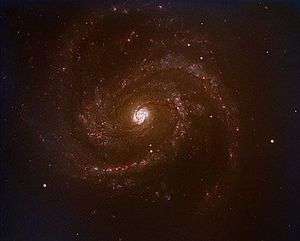
A team of European and American astronomers has announced the discovery of the best evidence yet for the nature of the star systems that explode as type Ia supernovae. The team obtained a unique set of observations with the European Southern Observatory's Very Large Telescope and the Keck I 10-meter telescope in Hawaii.
The researchers were able to detect the signature of the material that surrounded the star before it exploded. The evidence strongly supports the scenario in which the explosion occurred in a double-star system where a white dwarf is fed by a red giant.
"The powerful 10 meter Keck Telescope with its recently refurbished high-resolution spectrograph finally gives us the capability to follow these supernovae for months, as we have done here. We are now busy taking advantage of this new window of opportunity," says Avishay Gal-Yam, an astronomer at the California Institute of Technology who led the Caltech research team. "This is really an exciting avenue that Keck opens up to us."
Because type Ia supernovae are extremely luminous and quite similar to one another, these exploding events have been used extensively as cosmological reference beacons to trace the expansion of the universe.
However, despite significant recent progress, the nature of the stars that explode and the physics that governs these powerful explosions have remained poorly understood.
In the most widely accepted models of type Ia supernovae, the pre-explosion white dwarf star interacts with a much larger companion star. Because of the proximity of the two stars and the strong gravitational attraction produced by the very compact white dwarf, the companion star continuously loses mass, "feeding" the white dwarf. When the mass of the white dwarf exceeds a critical value slightly higher than the mass of the sun, it explodes.
"To shed some light on the systems that explode as type Ia supernovae, we decided to search for signatures of the material transferred to the white dwarf in the surrounding material," says Ferdinando Patat, lead author of the paper reporting the results in this week's issue of Science Express, the online version of the research journal Science.
The team of astronomers studied in great detail SN 2006X, a type Ia supernova that exploded 70 million light-years away from us, in the stunning spiral galaxy Messier 100.
The observations were made with the Ultraviolet and Visual Echelle Spectrograph mounted at ESO's 8.2 meter Very Large Telescope on four different occasions, over a time span of four months. A fifth late-time epoch spectrum of SN 2006X was secured with the Keck Telescope. The astronomers also made use of radio data obtained with National Radio Astronomy Observatory's Very Large Array as well as with images extracted from the NASA/European Space Agency Hubble Space Telescope archive.
The most remarkable finding is the clear evolution seen in the absorption profile of the sodium lines over the few months following the explosion. This, the astronomers deduce, is linked to the presence of a number of expanding shells surrounding the system. These shells are left over from the star that was force-feeding the white dwarf until its sudden catastrophic and spectacular death.
"The material we have uncovered probably lies in a series of shells having a radius of the order of 0.05 light-years, or roughly 3,000 times the distance between Earth and the sun," explains Patat. "The material is moving with a velocity of 50 km/s, implying that the material would have been ejected some 50 years before the explosion."
Such a velocity is typical for the winds of red giant stars. The system that exploded was thus most likely composed of a white dwarf that acted as a giant "vacuum cleaner," drawing gas off of its red giant companion. In this case, however, the cannibal act proved mortal for the white dwarf. This is the first time that any clear and direct evidence for material surrounding the exploding star has been found.
"We are still not certain whether SN 2006X is a unique case, or is instead representative of all type Ia supernovae. Additional studies of similar objects will be crucial for determining that-and we are already working on observations of another type Ia supernova," says Caltech astronomer Josh Simon, who is leading a similar study of the recent event SN 2007af using observations collected at Keck and other facilities. "We should know even more within the next year," he concludes.
The team is composed of Patat and Luca Pasquini (ESO), Poonam Chandra and Roger Chevalier (University of Virginia), Stephen Justham, Philipp Podsiadlowski, and Christian Wolf (University of Oxford), Gal-Yam and Simon (Caltech), Ian Crawford (Birkbeck College London), Paolo Mazzali, Wolfgang Hillebrandt, and Nancy Elias-Rosa (Max Planck Institute for Astrophysics), Adi Pauldrach (Ludwig Maximilians University), Kenichi Nomoto (University of Tokyo), Stefano Benetti, Enrico Cappellaro, Alvio Renzini, Franco Sabbadin, and Massimo Turatto (INAF-Astronomical Observatory), Douglas Leonard (San Diego State University), and Andrea Pastorello (Queen's University Belfast).
Source: Caltech


