UN sounds alarm on unsecured uranium waste in Tajikistan
Dec 14, 2012
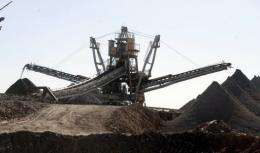
Plant equipment is pictured at France's state-owned nuclear giant Areva's uranium mine on September 26, 2010, in Arlit, Niger. The United Nations warned Friday that nearly 55 million tonnes of radioactive waste from old Soviet-era uranian mines remain in unsecured sites in northern Tajikistan.

The United Nations warned Friday that nearly 55 million tonnes of radioactive waste from old Soviet-era uranian mines remain in unsecured sites in northern Tajikistan.

The former Soviet republic, where Stalin's empire once mined to create its first nuclear bomb, is still stuck with about 54.8 million tonnes of unsecured waste from the now mainly abandoned mines, the United Nations Economic Commission for Europe (UNECE) said.

The waste is "not treated, not confined, not secured," agency spokesman Jean Rodriguez told reporters in Geneva.

In its second environmental performance report for the country, the lamented the lack of progress made to clean up the , which it said appeared to remain at the same level as in 1990.

"The state of radioactive waste storage is one of the main problems in Tajikistan," it said, noting that a number of the unsecured sites are near Khujand, Tajikistan's second largest city.

The largest single dump site contains 12 million tonnes of radioactive waste and is in the town of Taboshar, north of Khujand, the report showed.

The uranium used when the first Soviet was successfully tested on August 29, 1949, was extracted in northern Tajikistan.

Uranium from Kyrgyzstan and Uzbekistan was also processed for decades near Khujand, and 35,000 cubic metres of low-level radioactive waste accumulated there, according to UNECE

The health risks associated with exposure to uranium are well-known. According to the US Department of Energy, sustained exposure can result in kidney damage and an increased risk of cancer.

UNECE praised the (IAEA) for trying to set up projects to help the country manage its radioactive waste, but stressed that "due to the magnitude of the problem, it is hard to envisage that this issue will be solved in the foreseeable future."

Explore further: Chinese, Indian airlines face EU pollution fines

add to favorites email to friend print save as pdf

Related Stories

Radioactive ash found in waste plants near Tokyo

Jul 12, 2011

Japanese waste incineration plants near Tokyo have found high levels of radiation in ash, and officials said Tuesday it may be from garden waste contaminated by the Fukushima nuclear disaster.

Recommended for you

Chinese, Indian airlines face EU pollution fines

May 18, 2013

Eight Chinese and two Indian airlines face fines of up to several million euros for not paying for their greenhouse gas emissions during flights within the bloc, the European Commission said on Friday.

Fracking risks to ground water assessed

May 17, 2013

(Phys.org) —Extraction of "unconventional" gas from sedimentary rocks such as shale could provide a clean energy source and help some regions to become energy independent, but concerns have been raised ...

Caribbean talks conservation on Branson's island

May 17, 2013

(AP)—Surrounded by a turquoise sea and a menagerie of exotic animals on a billionaire's private island, political and business leaders gathered Friday to back an initiative aimed at expanding protection ...

User comments : 1

Adjust slider to filter visible comments by rank

Display comments: newest first

Jimee
not rated yet Dec 15, 2012
More nuclear waste, please sir?

More news stories

Galaxy's Ring of Fire

Johnny Cash may have preferred this galaxy's burning ring of fire to the one he sang about falling into in his popular song. The "starburst ring" seen at center in red and yellow hues is not the product of ...

Earth's center is out of sync

(Phys.org) —We all know that the Earth rotates beneath our feet, but new research from ANU has revealed that the center of the Earth is out of sync with the rest of the planet, frequently speeding up and ...