Marine park 'the size of the Moon' takes shape in Pacific
An ambitious plan to link marine parks across a vast swathe of ocean—whose surface area would equal that of the Moon—is slowly coming together piece by piece, say conservationists.
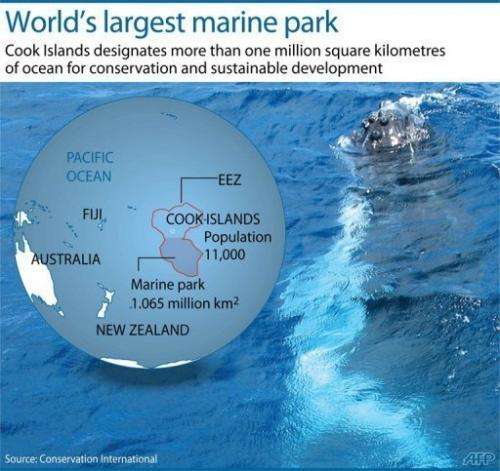
Former international rugby league player turned environmentalist Kevin Iro is a driving force behind the part of the park that will encompass the Cook Islands—a nation whose combined landmass is barely bigger than Washington DC.
"When I was a kid, this was all alive," said Iro, grimacing as he scooped up a lump of dead, grey coral while walking the white sands of a Cook Island beach in the Pacific.
"There were tracks in the coral and if you walked off them you could hear the coral crunching. Now there's no coral here, basically."
The Cooks' Prime Minister Henry Puna formally unveiled the 1.065 million square kilometre (411,000 square mile) reserve when he hosted the Pacific Islands Forum last month, vowing to protect the ocean for future generations.
Puna said the commitment by the tiny nation of 15 islands was its major contribution "to the well-being of not only our peoples, but also of humanity".
Peter Seligmann, co-founder of green group Conservation International (CI), said the establishment of such a large marine park was a courageous move for the Cooks and placed the Pacific at the forefront of ocean conservation.
But to Seligmann the Cook Islands park, while welcome, is just a single piece of the jigsaw.
The American is working with Pacific island states to create a network of similar parks across the region to ensure one of the world's last pristine ocean ecosystems is managed sustainably.
The scale of the proposed network, dubbed the Pacific Oceanscape, is unprecedented—a 40 million square kilometre area stretching from the Marshall Islands in the north almost to New Zealand in the south.
That's about eight percent of the world's surface area, almost four times larger than Europe and big enough to fit Australia in five times over. It's almost exactly the same size as the surface area of the Moon.
"What we are seeing is the largest conservation initiative in history," Seligmann told AFP. "Piece by piece, nation by nation, it's coming together. It's massive."
Kiribati and Tokelau have already joined the Cooks in declaring huge marine parks, while the French Pacific territory of New Caledonia has signalled its intention to declare a 1.4 million square kilometre reserve in the next few years.
Seligmann said members of the 15-nation Pacific Islands Forum, all of which have enormous marine territories, had unanimously backed the proposal and more reserves were in the pipeline.
"It's in the enlightened self interest of each of these nations, they're the beneficiaries," he said.
"The oceans are under siege. We have major fisheries under duress, coral bleaching due to the changing climate and acidification of the ocean.
"(For Pacific island states), it protects their resources, it gives them more revenues, more security and ties in with their history and culture."
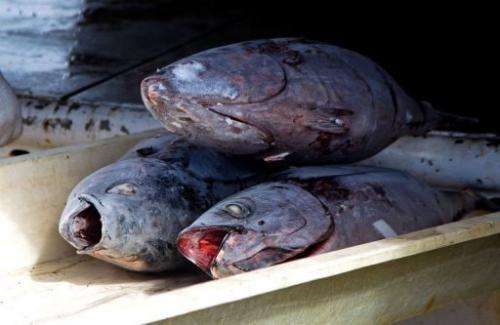
The huge Pacific expanse is home to 60 percent of the world's tuna stocks and contains ecologically valuable seagrass beds and coral reefs that teem with sea life, whales, dolphins and seabirds.
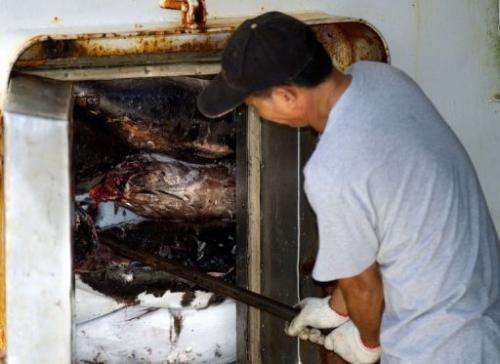
The idea is not to ban commercial fishing or mineral exploration, but to ensure they are managed properly, Marea Hatziolos, the World Bank's senior coastal and marine specialist, explained.
She said that while trawlers would be barred from some core areas of high conservation value, zones would also be set aside for activities such as commercial fishing and tourism.
"There's definitely an economic dimension to this, apart from protecting biodiversity," she told AFP. "It allows small Pacific nations to generate revenue."
"This is part of a strategy to capture the benefits of good stewardship—conservation and sustainability must go hand in hand."
Critics have questioned the value of declaring such large marine reserves when Pacific island nations do not have the resources to patrol them and enforce bans on illegal fishing.
Seligmann acknowledged the problem but said it was an area where developed nations in the region such as the United States, Australia, Japan and New Zealand could help by providing surveillance.
"It's a huge ocean, enforcement's a real challenge... (but) it's in the interests of developed nations to ensure that fisheries are still plentiful in 100 years," he said.
For Iro, the Pacific Oceanscape is an extension, albeit on a massive scale, of the traditional "raui" system which Cook Islanders have used to protect their fishing grounds for centuries.
"The chiefs would come in and say 'we won't fish this area anymore, I'm putting a raui on it and no one can touch it until the stocks regenerate'," he said.
"Everyone in the Cook Islands grows up knowing why the raui's put in place and they won't fish there until it's lifted. This marine park thing is basically the same but an expanded version."
(c) 2012 AFP


