Brave new world: Pioneering electronic publication of new plant species
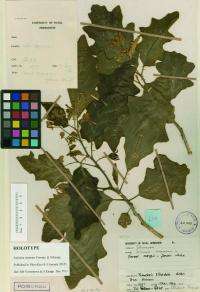
The changes to the publication requirements of new names for algae, fungi and plants accepted at the XVIII International Botanical Congress in Melbourne in July 2011 initiated several important challenges to scientists, publishers and information specialists. To address practical questions arising from the Congress decisions, the open access journal PhytoKeys will publish a series of seven exemplar papers, one each day for the first week of 2012, starting from the 1st of January. The completed journal issue will be printed as an additional, though not mandatory, form of archiving on the 7th of January 2012.
"Electronic-only publishing in botany means that publishers do not need to produce printed versions of their journals to verify that a new name has been effectively published", said Dr Sandra Knapp from the Natural History Museum London, deputy editor of PhytoKeys and one of the authors of the first electronic-only description of a new African species of Solanum (the genus name for tomatoes and many other important plant species), published on the 1st of January 2012. "This important change, however, needs to be supported by strong, responsible practices by both publishers and authors, one of the most important being the proper archiving of the published paper" added Dr Knapp, "It is important to reiterate that these new rules do not mean new names can be published anywhere online; authors and publishers must work together."
"Beyond the mandatory deposition in trusted international electronic archives, such as the open access archive of the National Library of Medicine of the United States, the best possible guarantee for a proper preservation of the published information is open access. This allows an unlimited number of copies to be freely downloaded and stored in different institutional and private archives throughout the world, as well as being available to researchers, particularly in developing countries, who otherwise would not have access to many scientific serials", commented Dr Matt von Konrat from the Field Museum of Chicago, author of a new species of liverwort (closest living descendants of the earliest plants to grow on land) from New Zealand, to be published electronically on the 2nd of January 2012.
From the 1st of January 2012 PhytoKeys will publish taxonomic papers on the day they are approved by the editors. The electronic versions of the paper will be archived in PubMedCentral. In addition, each species description will be exported on the day of publication to the Encyclopedia of Life, to the Wiki environment Species-id. All biological data will be shared or linked with many international databasing initiatives. The bibliographic information in each paper will be harvested automatically by the Citebank database of the Biodiversity Heritage Library, the main German aggregator for biological information Vifabio.de and many others. Although not required by the Code, each new flowering plant species description will bear a unique identifier from the International Plant Names Index (IPNI), housed at Royal Botanical Gardens Kew in the UK.
Will PhytoKeys continue to produce a printed version? "Definitely, yes!", replied Prof. Lyubomir Penev, managing editor of the journal and founder of Pensoft Publishers, who launched PhytoKeys in 2009. "We shall not only maintain printing a full-color printed version of the journal, but will continue sending complimentary copies to leading botanical libraries to ensure 100 % secure archiving".
More information: Vorontsova MS, Knapp S (2012) A new species of Solanum (Solanaceae) from South Africa related to the cultivated eggplant. PhytoKeys 8: 1-11. doi: 10.3897/PhytoKeys.8.2462
Provided by Pensoft Publishers


