Orchids and fungi: An unexpected case of symbiosis
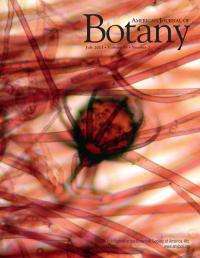
The majority of orchids are found in habitats where light may be a limiting factor. In such habitats it is not surprising that many achlorophyllous (lacking chlorophyll), as well as green, orchids depend on specific mycorrhizal fungal symbionts to supply them with carbohydrates in order to grow. However, orchids are found in a wide range of habitats and range in their photosynthetic capabilities. For those orchids that are fully photosynthetic, and presumably capable of acquiring their own organic carbon, are they less reliant on a specific suite of mycorrhizal fungi? A new study that examines fungal diversity in orchids in open sunny habitats, questions this assumption.
Mariangela Girlanda and Silvia Perotto, from the University of Turin, Italy, whose main areas of research include the biodiversity, phylogeny, and ecology of microfungi, and their colleagues were interested in determining whether the mycorrhizal fungi associated with Mediterranean orchids found in sunny meadow habitats were more diverse and more specific to their orchid partners than previously assumed. They published their results in the July issue of the American Journal of Botany.
"Earlier studies showed how orchids with little or no photosynthesis gain the organic carbon they need for growth through specific associations with ectomycorrhizal fungi, capable of fetching carbon mainly through symbiosis with other photosynthetic plants or with saprotrophic fungi, breaking down and assimilating complex organic substrates," said Perotto. "A logical hypothesis based on these findings was that fully photosynthetic orchids should not depend on their mycorrhizal partners for organic carbon.
"By contrast, they are expected to transfer to the fungal symbionts part of the photosynthate, like plants normally do," Perotto continued. "This could relax the need for specificity and lead to non-specific associations."
Girlanda, Perotto, and co-authors used both culture dependent and independent molecular approaches to identify the mycorrhizal fungi associated with each of four orchid species—Ophrys fuciflora, Anacamptis laxiflora, Orchis purpurea, and Serapias vomeracea—found in northern Italy.
The authors isolated fungi from the roots of up to 14 plants of each orchid species and grew them on agar plates for identification. This culture-dependent, in-vitro isolation technique revealed a diverse spectrum of endophytic fungi associated with each orchid species, including mycelia of a group of fungi, Rhizoctonia, that are typically found in these types of orchids.
In an approach that turned out to complement the culture-dependent approach, because it revealed a different suite of Rhizoctonia and basidiomycetous and ascomycetous fungal endophytes, the authors also directly amplified genomic DNA from orchid roots using universal and tulasnelloid-specific fungal primers.
Interestingly, two of the orchid species, Orchis purpurea and Ophrys fuciflora, had lower fungal diversity and more specific mycobiont communities compared with the other two orchids, Anacamptis laxiflora and Serapias vomeracea. Furthermore, when the authors compared the suite of Rhizoctonia fungi found in Serapias vomeracea across different meadows, they found that individual plants did not locally adapt to the fungi present at that location but instead associated specifically with fungi present in similar habitats throughout their range. Girlanda and colleagues conclude that this indicates that, despite being photosynthetic, these orchids do form specific mycorrhizal associations.
"Our paper shows that mycorrhizal specificity is not restricted to fully or partially nonphotosynthetic orchids," notes Girlanda, "because some photosynthetic species can associate with specific fungal clades not shared with other sympatric orchids."
So to what degree are these photosynthetic, sunny meadow orchids dependent on their fungal associates for nutrient acquisition?
To answer this question, the authors used stable isotope analysis to compare isotopically distinguishable fungal-derived carbon and nitrogen in orchid tissue and compared it to that of neighboring non-orchid plants. This technique assesses how much of the organic carbon and nitrogen found in the leaves of the orchids was acquired from their fungal partners.
The authors found that all four orchids had higher N15 compared to their neighbors, indicating that these orchids do depend on their fungal symbionts for a substantial amount of nutrition. Moreover, the orchid with the highest fungal specificity, Orchis purpurea had the highest N15 and C13 gain, and was thus partly dependant on its fungal partners for organic carbon.
"Our paper demonstrates that some fully photosynthetic orchids can still gain organic carbon from their mycorrhizal fungal partners," commented Girlanda. "Of course we would like to investigate this phenomenon further in orchids such as Orchis purpurea in order to understand whether carbon dependency may be related to particular seasons, life stages and growth patterns, or to plant species."
"It seems that there is not such a sharp distinction between photosynthetic and non-photosynthetic orchids, despite the different fungal partners and photoautotrophic capabilities," concluded Perotto. "A flow of organic carbon from the fungus to the plant can also occur in photosynthetic species and likely depends on energy demands by the plant during different life stages."
Perotto and Girlanda indicate that there are still many questions they'd like to pursue, such as learning the source for the fungal-derived carbon found in these orchids as well as the functional roles of the multiple fungi found in the adult orchid roots.
More information: Girlanda, Mariangela, Rossana Segreto, Donata Cafasso, Heiko Tobias Liebel, Michele Rodda, Enrico Ercole, Salvatore Cozzolino, Gerhard Gebauer, and Silvia Perotto. (2011). Photosynthetic Mediterranean meadow orchids feature partial mycoheterotrophy and specific mycorrhizal associations. American Journal of Botany 98(7): 1148-1163. DOI: 10.3732/ajb.1000486
Provided by American Journal of Botany


