Breakthrough for MRSA treatment found
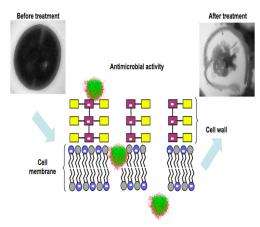
(PhysOrg.com) -- Researchers from IBM and the Institute of Bioengineering and Nanotechnology discovered a nanomedicine breakthrough in which new types of polymers were shown to physically detect and destroy antibiotic-resistant bacteria and infectious diseases like Methicillin-resistant Staphylococcus aureus, known as MRSA.
Discovered by applying principles used in semiconductor manufacturing, these nanostructures are physically attracted to infected cells like a magnet, allowing them to selectively eradicate difficult to treat bacteria without destroying healthy cells around them. These agents also prevent the bacteria from developing drug resistance by actually breaking through the bacterial cell wall and membrane, a fundamentally different mode of attack compared to traditional antibiotics.
MRSA is just one type of dangerous bacteria that is commonly found on the skin and easily contracted in places like gyms, schools and hospitals where people are in close contact. In 2005, MRSA was responsible for nearly 95,000 serious infections, and associated with almost 19,000 hospital stay-related deaths in the United States.
The challenge with infections like MRSA is two fold. First, drug resistance occurs because microorganisms are able to evolve to effectively resist antibiotics because current treatments leave their cell wall and membrane largely undamaged. Additionally, the high doses of antibiotics needed to kill such an infection indiscriminately destroy healthy red blood cells in addition to contaminated ones.
“The number of bacteria in the palm of a hand outnumbers the entire human population,” said Dr. James Hedrick, Advanced Organic Materials Scientist, IBM Research – Almaden. “With this discovery we’ve been able to leverage decades of materials development traditionally used for semiconductor technologies to create an entirely new drug delivery mechanism that could make them more specific and effective.”
If commercially manufactured, these biodegradable nanostructures could be injected directly into the body or applied topically to the skin, treating skin infections through consumer products like deodorant, soap, hand sanitizer, table wipes and preservatives, as well as be used to help heal wounds, tuberculosis and lung infections.
“Using our novel nanostructures, we can offer a viable therapeutic solution for the treatment of MRSA and other infectious diseases. This exciting discovery effectively integrates our capabilities in biomedical sciences and materials research to address key issues in conventional drug delivery,” said Dr. Yiyan Yang, Group Leader, Institute of Bioengineering and Nanotechnology, Singapore.
How it Works
The human body’s immune system is designed to protect us from harmful substances, both inside and out, but for a variety of reasons, many of today’s conventional antibiotics are either rejected by the body or have a limited success rate in treating drug-resistant bacteria. The antimicrobial agents developed by IBM Research and the Institute of Bioengineering and Nanotechnology are specifically designed to target an infected area to allow for a systemic delivery of the drug.
Once these polymers come into contact with water in or on the body, they self assemble into a new polymer structure that is designed to target bacteria membranes based on electrostatic interaction and break through their cell membranes and walls. The physical nature of this action prevents bacteria from developing resistance to these nanoparticles.
The electric charge naturally found in cells is important because the new polymer structures are attracted only to the infected areas while preserving the healthy red blood cells the body needs to transport oxygen throughout the body and combat bacteria.
Unlike most antimicrobial materials, these are biodegradable, which enhances their potential application because they are naturally eliminated from the body (rather than remaining behind and accumulating in organs).
The antimicrobial polymers created by IBM Research and the Institute of Bioengineering and Nanotechnology and were tested against clinical microbial samples by the State Key Laboratory for Diagnosis and Treatment of Infectious Diseases, First Affiliated Hospital, College of Medicine and Zhejiang University in China. The full research paper was recently published in the peer-reviewed journal Nature Chemistry.
Researchers from IBM are already applying principles from nanotechnology to create potential medical innovations like the DNA Transistor and 3-D MRI. Most recently they have been working on a one step point-of-care-diagnostic test based on an innovative silicon chip that requires less sample volume, can be significantly faster, portable, easy to use, and can test for many diseases. Dubbed “Lab on a Chip,” the results are so quick and accurate that a small sample of a patient’s blood could be tested immediately following a heart attack to enable the doctor to quickly take a course of action to help the patient survive.
Provided by IBM


