Page 8: Research news on Single molecule techniques

Single molecule techniques comprise a set of experimental methods that detect, manipulate, and analyze individual biomolecules or molecular complexes, circumventing ensemble averaging and revealing heterogeneity in structure, dynamics, and function. Core modalities include single-molecule fluorescence (e.g., smFRET, TIRF microscopy), optical and magnetic tweezers, atomic force microscopy, and nanopore-based sensing. These techniques enable direct measurement of forces, conformational changes, binding/unbinding events, and reaction pathways with nanometer spatial and millisecond (or better) temporal resolution. They are widely applied to study nucleic acid–protein interactions, molecular motors, enzyme kinetics, folding energy landscapes, and mechanotransduction at the level of individual molecules.

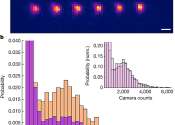
Peering into nanofluidic mysteries one photon at a time

A discovery in the field of nanofluidics could shake up our understanding of molecular behavior on the tiniest scales. Research teams at EPFL and the University of Manchester have revealed a previously hidden world by using ...

page 8 from 12