Page 25: Research news on Quasiparticles & collective excitations

Quasiparticles & collective excitations as a research area investigates emergent, effective degrees of freedom in many-body systems, where interactions among underlying microscopic constituents give rise to particle-like or mode-like entities such as phonons, magnons, polarons, excitons, and plasmons. This field focuses on formulating and analyzing low-energy effective theories, dispersion relations, lifetimes, and interaction vertices of these excitations using frameworks such as many-body perturbation theory, Green’s functions, field-theoretic methods, and numerical many-body techniques. It plays a central role in understanding transport, superconductivity, topological phases, and nonequilibrium dynamics in condensed matter, ultracold atomic systems, and related quantum materials.

Scientists create an 'optical conveyor belt' for quasiparticles

Using interference between two lasers, a research group led by scientists from RIKEN and NTT Research have created an "optical conveyor belt" that can move polaritons—a type of light-matter hybrid particle—in semiconductor-based ...

Topological phonons: Where vibrations find their twist

An international team of researchers has discovered that the quantum particles responsible for the vibrations of materials—which influence their stability and various other properties—can be classified through topology.

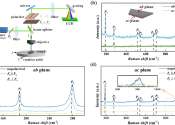
New study reveals phonon properties of β-MoB₂ single crystal

According to research published in Physical Review Research, a research team led by Prof. Luo Xuan from the Hefei Institutes of Physical Science of the Chinese Academy of Sciences discovered the existence of stacking faults ...

page 25 from 32