Page 11: Research news on Magnetic fields

Magnetic fields as a research area encompasses theoretical, computational, and experimental studies of magnetic field generation, structure, dynamics, and interaction with matter across scales, from condensed-matter systems to astrophysical and cosmological environments. It includes investigation of classical and quantum magnetostatics and electrodynamics, dynamo processes in plasmas and fluids, magnetohydrodynamics, and spin- and orbital-derived magnetism in materials. Research addresses field topology, reconnection, turbulence, confinement, and transport, as well as applications in magnetic resonance, spintronics, fusion devices, particle accelerators, space weather, and precision metrology, often integrating advanced diagnostics, numerical simulations, and multi-scale modeling.

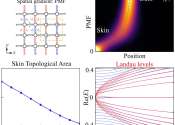
Researchers tune Casimir force using magnetic fields

Research teams led by Prof. Zeng Changgan and Zhang Hui from the Hefei National Laboratory for Physical Sciences at the Microscale, the University of Science and Technology of China (USTC) of the Chinese Academy of Sciences ...

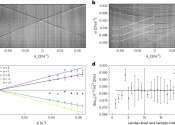
Making light 'feel' a magnetic field like an electron would

Unlike electrons, particles of light are uncharged, so they do not respond to magnetic fields. Despite this, researchers have now experimentally made light effectively "feel" a magnetic field within a complicated structure ...

Super strong magnetic fields leave imprint on nuclear matter

A new analysis by the STAR collaboration at the Relativistic Heavy Ion Collider (RHIC), a particle collider at the U.S. Department of Energy's (DOE) Brookhaven National Laboratory, provides the first direct evidence of the ...

Scientists take control of magnetism at the microscopic level

Atoms in magnetic materials are organized into regions called magnetic domains. Within each domain, the electrons have the same magnetic orientation. This means their spins point in the same direction. "Walls" separate the ...

page 11 from 12