Page 10: Research news on Infrared techniques

Infrared techniques encompass analytical and imaging methods that exploit the interaction of infrared (IR) radiation with matter to probe molecular structure, dynamics, and composition. Core approaches include mid-IR absorption spectroscopy (e.g., FTIR), near-IR spectroscopy, and IR microscopy, which measure vibrational transitions associated with specific chemical bonds and functional groups. Variants such as attenuated total reflectance (ATR), diffuse reflectance (DRIFTS), and infrared reflection–absorption spectroscopy (IRRAS) extend applicability to diverse sample types and surfaces. Time-resolved and nonlinear IR methods (e.g., pump–probe, 2D-IR) enable investigation of ultrafast processes and complex environments, supporting applications in materials science, chemistry, biology, and environmental analysis.

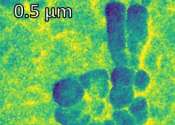
Probing for THz radiation directly at the source

The search for and development of efficient terahertz (THz) sources is one of the major scientific goals of the 21st century. The THz region of the electromagnetic spectrum is composed of light frequencies in between the ...

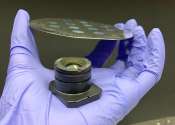
New chiral nanostructures to extend the material platform

A research team transferred chirality from the molecular scale to a microscale to extend material platforms and applications. The optical activity from this novel chiral material encompasses to short-wave infrared region.

Near-infrared synergy therapy for cancer nanoclusters

As a minimally-invasive method for cancer therapy at precise locations, NIR-induced photothermal therapy (PTT) has drawn extensively attention. The therapeutic mechanism is the use of photothermal agents (PTAs) in the treatment ...

page 10 from 10