Page 4: Research news on Information & communication theory

Information and communication theory, as a research area, investigates the fundamental limits and principles governing the representation, transmission, processing, and storage of information in communication systems. It encompasses topics such as source and channel coding, rate–distortion theory, channel capacity, error-correcting codes, network information theory, and multi-user communication. The field develops mathematical models and performance bounds for noisy and noiseless channels, explores trade-offs among reliability, efficiency, latency, and complexity, and informs the design of practical communication protocols and coding schemes in digital communications, data networks, and distributed information-processing systems.

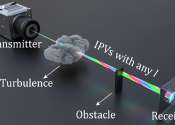
New theory describes how waves carry information from surroundings

Waves pick up information from their environment through which they propagate. A theory of information carried by waves has now been developed at TU Wien—with astonishing results that can be utilized for technical applications.

Using entangled particles to create unbreakable encryption

The discovery of quantum mechanics opened the door to fundamentally new ways of communicating, processing, and protecting data. With a quantum revolution well underway, long unimaginable opportunities are coming within our ...

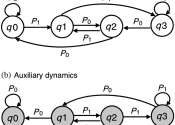
New work extends the thermodynamic theory of computation

Every computing system, biological or synthetic, from cells to brains to laptops, has a cost. This isn't the price, which is easy to discern, but an energy cost connected to the work required to run a program and the heat ...

Physicists reach atomic-scale telegraphy with light

In the 1880s Heinrich Hertz discovered that a spark jumping between two pieces of metal emits a flash of light—rapidly oscillating electromagnetic waves—which can be picked up by an antenna. To honor his groundbreaking ...

page 4 from 5