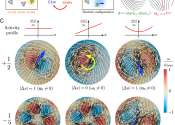
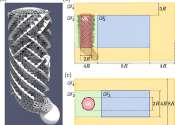
Flow control as a research area encompasses the study of strategies, models, and algorithms for regulating the temporal and spatial evolution of fluid flows to achieve desired performance metrics such as drag reduction, transition delay, mixing enhancement, or noise mitigation. It integrates fluid mechanics, control theory, and numerical simulation, often employing reduced-order modeling, optimal control, robust and adaptive control, and machine learning–based methodologies. Research spans passive, active, and reactive control approaches applied to laminar–turbulent transition, separation control, vortex dynamics, and internal and external aerodynamics, with applications in aerospace, energy systems, microfluidics, and process engineering.