Frontpage » Tag » neutrinos

News tagged with neutrinos

The neutrinophone: It's not for you. (But it is cool)

First of all, the neutrinophone isn’t really a phone. It has the potential to be used for communication across immense distances—including into outer space—but even Jeff Nelson says the neutrinophone’s ...

Physics / General Physics

created May 24, 2012 | popularity 4.3 / 5 (7) | comments 0

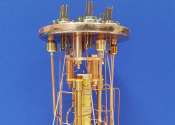
Lying in wait for WIMPs: Researchers seek to dramatically increase sensitivity of Large Underground Xenon detector

Although it's invisible, dark matter accounts for at least 80 percent of the matter in the universe. No one knows what it is, but most scientists would bet on weakly interacting massive particles, or WIMPs.

Physics / General Physics

created May 23, 2012 | popularity 4 / 5 (7) | comments 19 | with audio podcast

Research on neutrinos allows the discovery of vortices in the abysses of the eastern Mediterranean

An INFN research project on neutrinos has made it possible to observe for the first time the presence of chains of marine vortices in the Mediterranean at depths of more than 3000 meters, large water structures of diameters ...

Space & Earth / Earth Sciences

created May 16, 2012 | popularity 4.9 / 5 (8) | comments 0

WiggleZ project reaches new heights in measuring neutrino mass

The lightest known subatomic particles in the Universe are now able to be more accurately scrutinised, in light of new astronomic research two years in the making.

Physics / General Physics

created Apr 30, 2012 | popularity 4.8 / 5 (4) | comments 0 | with audio podcast

Neutrinos put cosmic ray theory on ice

(Phys.org) -- A telescope buried beneath the South Pole has failed to find any neutrinos accompanying exploding fireballs in space, undermining a leading theory of how cosmic rays are born.

Space & Earth / Astronomy

created Apr 20, 2012 | popularity 4.5 / 5 (4) | comments 11 | with audio podcast

Where do the highest-energy cosmic rays come from? Not from gamma-ray bursts, says IceCube study

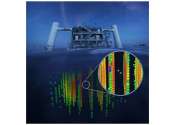
The IceCube neutrino telescope encompasses a cubic kilometer of clear Antarctic ice under the South Pole, a volume seeded with an array of 5,160 sensitive digital optical modules (DOMs) that precisely track ...

Physics / General Physics

created Apr 18, 2012 | popularity 4.9 / 5 (23) | comments 10 | with audio podcast

First results from RENO: Observation of the weakest neutrino transformation

The Reactor Experiment for Neutrino Oscillations (RENO) research team announced the first result of the search for the remaining, most elusive puzzle of the neutrino transformation. They have found disappearance of neutrinos ...

Physics / General Physics

created Apr 09, 2012 | popularity 3.8 / 5 (8) | comments 9 | with audio podcast

South Pole Telescope hones in on dark energy, neutrinos

Analysis of data from the 10-meter South Pole Telescope is providing new support for the most widely accepted explanation of dark energy — the source of the mysterious force that is responsible for the ...

Space & Earth / Astronomy

created Apr 02, 2012 | popularity 4.8 / 5 (11) | comments 7 | with audio podcast

Italian physicist behind 'faster-than-light' test resigns

An Italian physicist at the head of a team that made a cautious but hugely controversial claim that neutrinos may travel faster than the speed of light resigned on Friday following calls for his dismissal.

Physics / General Physics

created Mar 30, 2012 | popularity 1.7 / 5 (17) | comments 34

Budget cuts portend new direction for Fermilab's Long-Baseline Neutrino Experiment

(PhysOrg.com) -- Physicists working at Fermilab, the premier particle physics lab in the United States, have been asked to rework their plans for the Long-Baseline Neutrino Experiment (LBNE) in light of current ...

Physics / General Physics

created Mar 27, 2012 | popularity 5 / 5 (1) | comments 7 | with audio podcast report

Dance like a neutrino: Quantum scheme to simulate neutrino oscillations

The behaviour of some of the most elusive particles in the known universe can be simulated using three atoms in a lab, researchers at the Centre for Quantum Technologies (CQT) at the National University of Singapore have ...

Physics / Quantum Physics

created Mar 21, 2012 | popularity 4.8 / 5 (6) | comments 1

'Faster-than-light' particles fade after cross-check

Neutrinos do not go faster than light, according to fresh measurements of a test last year that had suggested the particles broke the Universe's speed limit, CERN said on Friday.

Physics / General Physics

created Mar 16, 2012 | popularity 4.8 / 5 (31) | comments 50

Researchers send 'wireless' message using neutrinos

(PhysOrg.com) -- A group of scientists led by researchers from the University of Rochester and North Carolina State University have for the first time sent a message using a beam of neutrinos – nearly ...

Physics / General Physics

created Mar 14, 2012 | popularity 4.7 / 5 (47) | comments 38 | with audio podcast

First results from Daya Bay find new kind of neutrino transformation

The Daya Bay Reactor Neutrino Experiment, a multinational collaboration operating in the south of China, today reported the first results of its search for the last, most elusive piece of a long-standing puzzle: ...

Physics / General Physics

created Mar 08, 2012 | popularity 4.8 / 5 (20) | comments 16 | with audio podcast

Daya Bay antineutrino detectors exceed performance goals

(PhysOrg.com) -- After just three months of operation, the Daya Bay Reactor Neutrino Experiment has far surpassed expectations, recording tens of thousands of particle interactions and paving the way to a better understanding ...

Physics / General Physics

created Mar 01, 2012 | popularity 5 / 5 (5) | comments 1 | with audio podcast

Neutrino

A neutrino (English pronunciation: /njuːˈtriːnoʊ/, Italian pronunciation: [neuˈtriːno]) is an electrically neutral, weakly interacting elementary subatomic particle with a half-integer spin, chirality and a disputed but small non-zero mass. It is able to pass through ordinary matter almost unaffected. The neutrino (meaning "small neutral one" in Italian) is denoted by the Greek letter ν (nu).

Neutrinos do not carry electric charge, which means that they are not affected by the electromagnetic forces that act on charged particles such as electrons and protons. Neutrinos are affected only by the weak sub-atomic force, of much shorter range than electromagnetism, and gravity, which is relatively weak on the subatomic scale, and are therefore able to travel great distances through matter without being affected by it.

Neutrinos are created as a result of certain types of radioactive decay, or nuclear reactions such as those that take place in the Sun, in nuclear reactors, or when cosmic rays hit atoms. There are three types, or "flavors", of neutrinos: electron neutrinos, muon neutrinos and tau neutrinos. Each type also has a corresponding antiparticle, called an antineutrino with an opposite chirality.

Most neutrinos passing through the Earth emanate from the Sun. About 65 billion (6.5×10¹⁰) solar neutrinos per second pass through every square centimeter perpendicular to the direction of the Sun in the region of the Earth.

In September 2011, neutrinos apparently moving faster than light were detected (see OPERA neutrino anomaly). Since then the experiment has undergone extensive critique and efforts to replicate the results because confirming the results would change our understanding of the theory of relativity. (See Speed below)
For more information about Neutrino, read the full article at Wikipedia.
This text uses material from Wikipedia and is available under the GNU Free Documentation License.