Siemens Warns of Possible Hearing Damage from Mobile Phones
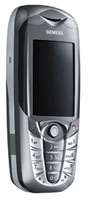
The mobile communication group of Siemens AG – Siemens mobile for short – has warned about a software-related defect in its 65 product series (C65, CX65, M65, S65, SL65 as well as all provider variations such as the CV65, CT65, CXV65 and CXT65) which could lead to failures in audio transmission in very rare and unlikely cases of usage. Because of the software error, if a telephone call is automatically cut off because the battery has run down, the disconnection melody could possibly start to play loudly. In extreme cases, this volume could lead to hearing damage.
However, this danger can only arise if the mobile phone is held up directly to the ear while the melody is playing. In order to rule out any danger of damage to health, however, Siemens recommends deactivating the disconnection melody or the disconnection animation function. The 65 product series has been received very positively by both the trade press and by consumers. Apart from its unique design for various target groups, it also provides comprehensive equipment features including a video function, Bluetooth and an integrated megapixel camera – depending on the model.
In addition, the phone call should be terminated as soon as the first "low battery" warning signal comes. To deactivate the disconnection melody, the user must first select the “Setup” item in the menu, then “Ringtones,” afterwards “More melodies,” and then the “Shutdown melody” can be deactivated by selecting “Switch off”.
Siemens attaches great importance to the comprehensive quality control of its products. It regularly examines current production and development according to strict internal and external criteria, during which the products are also tested under extreme conditions in order to guarantee the optimization and complete security of its equipment. In a laboratory test, it was discovered that a malfunction can occur in mobile phones of the 65 product series in very unlikely cases of usage. The error only occurs in the following case and in version 11 or earlier versions of the software: During a telephone call, the battery has to have run down to such an extent that the warning signal notifying the user about this status has rung three times in the space of one minute. After this has occurred, the call is automatically disconnected. Shortly before the mobile phone finally shuts down, it will start playing the disconnection melody, which can play back at high volume in certain cases. If the user is still holding the phone up to his ear during this time, this can lead to hearing damage.
Siemens has already developed new equipment software that stops this malfunction in the mobile phones in the 65 product series. After approval is received from the network providers, the new update software versions will be provided free of charge in the coming weeks.
Source: Siemens AG
-
From lemons to lemonade: Reaction uses carbon dioxide to make carbon-based semiconductor,
32 comments
-
Thioridazine kills cancer stem cells in human while avoiding toxic side-effects of conventional cancer treatments,
3 comments
-
SpaceX private rocket blasts off for space station (Update),
42 comments
-
Climate scientists say they have solved riddle of rising sea,
31 comments
-
SpaceX capsule has 'new car' smell, astronauts say (Update),
4 comments
More news stories
Browser wars flare in mobile space
The browser wars are heating up again, but this time the fight is for dominance of the mobile Internet.
18 hours ago |
4 / 5 (4) |
3
Probability of contamination from severe nuclear reactor accidents is higher than expected: study
Catastrophic nuclear accidents such as the core meltdowns in Chernobyl and Fukushima are more likely to happen than previously assumed. Based on the operating hours of all civil nuclear reactors and the number ...
Technology / Energy & Green Tech
May 22, 2012 |
3.6 / 5 (25) |
56
|
HyperSolar shows dirty water no barrier to power world
(Phys.org) -- The Santa Barbara, California, company, HyperSolar, is set to transparently share the ups and downs of its research experiences toward the companys ultimate vision, successfully producing ...
SpotterRF debuts Radar Backpack Kit (w/ Video)
(Phys.org) -- SpotterRF has announced a special radar backpack kit designed to enhance situational awareness for soldiers on the ground. The company says its special radar is designed for warfighters as part ...
Tesla to launch electric sedan in US on June 22
Tesla Motors said Tuesday it would begin deliveries of "the world's first premium electric sedan" on June 22, slightly ahead of schedule.
Technology / Energy & Green Tech
May 22, 2012 |
4.5 / 5 (12) |
18
'Unzipped' carbon nanotubes could help energize fuel cells, batteries
Multi-walled carbon nanotubes riddled with defects and impurities on the outside could replace some of the expensive platinum catalysts used in fuel cells and metal-air batteries, according to scientists at ...
Change in developmental timing was crucial in the evolutionary shift from dinosaurs to birds: study
At first glance, it's hard to see how a common house sparrow and a Tyrannosaurus Rex might have anything in common. After all, one is a bird that weighs less than an ounce, and the other is a dinosaur that ...
Computer model used to pinpoint prime materials for efficient carbon capture
When power plants begin capturing their carbon emissions to reduce greenhouse gases and to most in the electric power industry, it's a question of when, not if it will be an expensive undertaking.
T cells 'hunt' parasites like animal predators seek prey, study shows
By pairing an intimate knowledge of immune-system function with a deep understanding of statistical physics, a cross-disciplinary team at the University of Pennsylvania has arrived at a surprising finding: T cells use a movement ...
Stunning image of smallest possible five-ringed structure
Scientists have created and imaged the smallest possible five-ringed structure about 100,000 times thinner than a human hair and you'll probably recognise its shape.
Land and sea species differ in climate change response: study
(Phys.org) -- Marine and terrestrial species will likely differ in their responses to climate warming, new research by Simon Fraser University and Australia’s University of Tasmania has found.