Vets at Zoo Atlanta inseminate snake
Dec 18, 2005
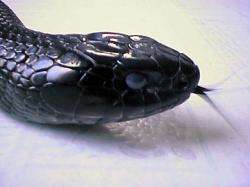
Eastern indigo snake

Veterinarians at Zoo Atlanta have performed what is believed to be the first artificial insemination of a snake.

The zoo was hoping that two eastern indigo snakes would reproduce by doing what comes naturally. But Blu, who was born at the zoo in 1988, just did not have what it takes to make partner, a snake on loan from the Georgia Department of Natural Resources, a mom.

Blu also suffers from a low sperm count.

The unnamed female was anaesthetized during the insemination, stretched out to her full 6 feet 2 inches on a gurney. Veterinarians say they will not know for about two months if the procedure took and she is indeed expecting.

Eastern indigo snakes are a non-venomous species and the longest snake in North America. In earlier days, the snakes were popular with carnival snake charmers.

Their numbers have been reduced because of habitat loss and the snake's own slow movements.

Copyright 2005 by United Press International

Explore further: Weekends are the best time to buy airline tickets, researchers find

add to favorites email to friend print save as pdf

Related Stories

Alarm over vanishing frogs in the Caribbean

Apr 10, 2013

A curtain of sound envelops the two researchers as they make their way along the side of a mountain in darkness, occasionally hacking their way with a machete to reach the mouth of a small cave.

Australian zoo probes mystery rhino deaths

Mar 21, 2012

An Australian outback zoo was Wednesday investigating the sudden and mystifying deaths of four white rhinos who showed "neurologic abnormalities" like stumbling.

Cayman's imperiled blue iguanas on the rebound

Aug 15, 2012

(AP) — The blue iguana has lived on the rocky shores of Grand Cayman for at least a couple of million years, preening like a miniature turquoise dragon as it soaked in the sun or sheltered inside crevices. ...

Recommended for you

The ascent of man: Why our early ancestors took to two feet

May 24, 2013

A new study by archaeologists at the University of York challenges evolutionary theories behind the development of our earliest ancestors from tree dwelling quadrupeds to upright bipeds capable of walking and scrambling.

Challenging the public's view of gender and science

May 24, 2013

According to She Figures 2012, which analyses gender equality in research, in 2010 women accounted for only 10 % of university rectors in Europe and 15.5 % were heads of institutions of the higher education ...

User comments : 0

More news stories

Submerged structure stumps Israeli archaeologists

The massive circular structure appears to be an archaeologists dream: a recently discovered antiquity that could reveal secrets of ancient life in the Middle East and is just waiting to be excavated.

Mais non! French universities may teach in English

In France, there's a brewing debate over whether to speak anglais in universite. The National Assembly on Wednesday was taking up an education reform bill that would allow public universities to hold some courses—like science ...