Tunguska Event: New Details and Sensational Theory
Aug 13, 2004
Tunguska event  - an artifact

During the press conference in Krasnoyarsk, Yuri Lavbin, the head of the last expedition, confirmed that parts of an extraterrestrial device had been discovered. The new expedition, organized by the Siberian Public State Foundation “Tunguska Space Phenomenon” completed its work on the scene of Tunguska meteorite fall on August 9.

The first expedition led by Professor Leonid Kulik of the Soviet Academy of Science travelled to the impact site in 1930, only 22 years after the event. However, no evidence of UFO crash was found.

Expeditions sent to the area in the 1950s and 1960s did find microscopic glass spheres in siftings of the soil. Chemical analysis showed that the spheres contained high proportions of nickel and iridium, which are found in high concentrations in meteorites, and indicated that they were of extraterrestrial origin.

Up till now, scientists believed that Tunguska event was caused by the airburst of an asteroid about 5 miles above the surface of the Earth. The asteroid is believed to have been roughly 60 meters across.

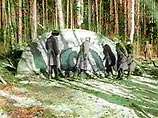
Now, researchers had traced the possible trajectory of the space object, assuming that the object had flown from West to East, unlike the previous missions who considered East to West direction. The new approach allowed the expedition members to find a buried object covered with trees.

The object appeared to be a large block made with metal. The researchers chipped a piece of the object and will now test its composition. Preliminary analyses show that it is a compound of iron silicate with unknown material.

The precise cause of the Tunguska event remains unknown. In scientific circles, the leading explanation for the blast is the impact of a meteorite. A related suggestion is that a meteorite exploded just above the Earth's surface. Whether the meteorite was of cometary or asteroidal origin is still a matter of controversy. Whatever the original cause of the event is, much of the data supports that the cause resembled a nuclear explosion.

In the absence of an obvious explanation, numerous alternative theories have been offered, such as a small black hole passing through the Earth, an impact from a piece of antimatter, and even the catastrophic destruction of a nuclear-powered alien spacecraft. However, there has not been much evidence for these exotic ideas, and simpler theories are available.

The new theory suggests that the event was a collision of a meteorite with an alien spaceship. “They exploded this enormous meteorite that headed towards us with enormous speed,” Yuri Lavbin said. Now this great object that caused the meteorite to explode is found at last. We will continue our research, he said.

Russian researchers plan another large-scale expedition to the Eastern Siberia.

FIND MORE NEWS ON TUNGUSKA EVENT

Explore further: Galaxy's Ring of Fire

add to favorites email to friend print save as pdf

Related Stories

Scientists find Moon, asteroids share history

Mar 25, 2013

(Phys.org) —NASA and international researchers have discovered that Earth's moon has more in common than previously thought with large asteroids roaming our solar system.

Russia asteroid impact: ESA update and assessment

Feb 19, 2013

The first firm details of the 15 February asteroid impact in Russia, the largest in more than a century, are becoming clear. ESA is carefully assessing the information as crucial input for developing the ...

Russia meteor not linked to asteroid flyby

Feb 17, 2013

New information provided by a worldwide network of sensors has allowed scientists to refine their estimates for the size of the object that entered that atmosphere and disintegrated in the skies over Chelyabinsk, ...

Russia halts search for meteorite

Feb 17, 2013

Russian authorities halted their search Sunday for the meteorite that spectacularly struck the Urals last week, leaving about 1,200 people injured and damaging several thousand buildings.

Bright streak of light reported over California

Feb 17, 2013

(AP)—Hours after a meteor exploded over Russia and injured more than 1,000 people and an asteroid passed relatively close to Earth, residents in California reported seeing an unusual flash of light over the San Francisco ...

Recommended for you

Mice, gerbils perish in Russia space flight

3 hours ago

A number of mice and eight gerbils sent into space in a Russian capsule destined to find out how well organisms can withstand extended flights perished during their journey, scientists said Sunday as the ...

Galaxy's Ring of Fire

May 18, 2013

Johnny Cash may have preferred this galaxy's burning ring of fire to the one he sang about falling into in his popular song. The "starburst ring" seen at center in red and yellow hues is not the product of ...

Mars rover Opportunity examines clay clues in rock

May 18, 2013

(Phys.org) —NASA's senior Mars rover, Opportunity, is driving to a new study area after a dramatic finish to 20 months on "Cape York" with examination of a rock intensely altered by water.

Chinese, Indian airlines face EU pollution fines

May 18, 2013

Eight Chinese and two Indian airlines face fines of up to several million euros for not paying for their greenhouse gas emissions during flights within the bloc, the European Commission said on Friday.

User comments : 0

More news stories

Russia retrieves mice, newts from space

A Russian capsule filled with 45 mice and 15 newts along with other small animals returned from a month's mission in orbit on Sunday with data scientists hope will pave the way for a manned flight to Mars.

Galaxy's Ring of Fire

Johnny Cash may have preferred this galaxy's burning ring of fire to the one he sang about falling into in his popular song. The "starburst ring" seen at center in red and yellow hues is not the product of ...

Honeybees trained in Croatia to find land mines

(AP)—Mirjana Filipovic is still haunted by the land mine blast that killed her boyfriend and blew off her left leg while on a fishing trip nearly a decade ago. It happened in a field that was supposedly ...

German energy shift faces headwinds

Tense engineers have their eyes peeled on complex colour-coded diagrams on a wall-sized screen that makes their control room look like the inside of a spaceship.