Sandstorm robot makes unprecedented 200-mile autonomous run
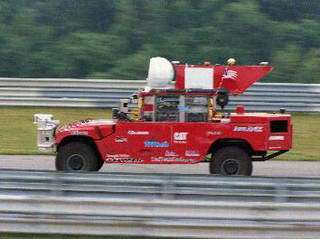
Carnegie Mellon University's autonomous robotic HUMMER Sandstorm drove an unprecedented 200 miles in seven hours without human guidance last week in preparation for the 2005 DARPA Grand Challenge, a 175-mile driverless desert race with a $2 million winner-take-all prize.
Sandstorm uses sensors to "see" and computers to "drive." It drove 131 laps on the 1.5-mile racecourse at the BeaveRun MotorSports Complex near Pittsburgh, Pa., on July 4. The drive was an endurance evaluation for the robot's computers, sensors and mechanical systems. The machine averaged 28 miles per hour and hit a top speed of 36 miles per hour to complete its 7-hour, 200-mile marathon.
"That doesn't sound like a big deal for a human-driven car, but it is a very big deal for the pioneering of computer-driven vehicles," said Red Team leader, Robotics Professor William L. "Red" Whittaker. "That distance, speed and duration are unprecedented for a completely autonomous machine. However, this machine and 19 others will face far more difficult conditions in the October 8 race across the Mojave Desert.
"We are a desert racing team without a desert, so we test on local sites like the BeaveRun race track," Whittaker said. "Sandstorm ran a quick pace on this track, but the Mojave will not be so easy or forgiving. On July 4, we learned that our hardware and software are reliable, and that is important. To finish first, you must first finish."
Sandstorm and its sister machine, the HUMMER H1ighlander are among the 40 vehicles that will compete in the Grand Challenge semifinals Sept. 26-Oct. 6 at the California Speedway at Fontana. That field of 40 will be culled to the 20 finalists that make the run for $2-million on Oct. 8.
For more information on the Red Team and its racing robots, see www.redteamracing.org
Source: Carnegie Mellon University


