New, Shape-Changing Materials Will Make Planes Like Hawks
Over the next 17 months, Virginia Tech will lead a team of researchers exploring the development of a new class of materials that will use plant protein structures in an attempt to mimic biological systems. The Defense Science Office of the Defense Advanced Research Project Agency (DARPA) is funding the $2.1 million project.
DARPA is specifically interested in a group of hard polymers called nastic materials. In biology, nastic refers to the natural movement of plants in response to changes in their environment, such as plants that track sunlight or that stiffen when watered. These movements are caused by changes in the water pressure inside the plant and can result in very large changes in shape. In this unique program, researchers will be working with a company on the application of nastic materials to a morphing aircraft wing. This wing would dynamically change its shape and control surfaces during flight.
The goal of the DARPA project, administered by John Main, is to develop synthetic materials that utilize internal pressure changes to cause large shape changes.
The plan calls for the investigation of the protein structures of plants for the purpose of understanding their role in generating shape changes in natural materials. The protein structures under analysis would then be used to develop a synthetic material to incorporate properties that produce controllable shape.
Ultimately, successful development of the nastic structure concept will provide a new class of materials based on the direct conversion of biochemical energy into mechanical work. In this manner it will provide a truly integrated ‘smart’ material that serves as the foundation for a new generation of biologically-inspired engineering systems.
In this unique program, researchers will be working with a company on the application of nastic materials to a morphing aircraft wing. This wing would dynamically change its shape and control surfaces during flight.
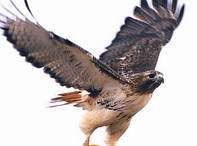
An analogy would be a hawk that is soaring through the sky, suddenly sees its prey, and changes its shape to make a dive towards the intended victim. As the raptor changes gear to fly southward at lightening speed, it must sense the outside forces and pressures for its trajectory.
Similarly, for an aircraft wing, engineers would need a material that's mechanically flexible. But designers also need a material with a surface that's controlled by sensors and electrical conductors that allow it to do that sensing and change shape accordingly. Properly engineered nastic materials might allow sensors that can be flexed.
Don Leo, professor of mechanical engineering in the College of Engineering at Virginia Tech and a member of the Center for Intelligent Materials Systems and Structures (CIMMS) at Virginia Tech, is the principal investigator on this project. His colleagues are: John Cuppoletti, College of Medicine, University of Cincinnati, Cincinnati, Ohio; Subhash Narang, SRI International, Palo Alto, Cal.; Jay Kudva, NextGen Aeronautics, Inc., Torrance, Cal.; and Victor Giurgiutiu, Department of Mechanical Engineering, University of South Carolina, Columbia, S.C. At Virginia Tech, Leo will be working with Tim Long, professor of chemistry in the College of Science, and Lisa Weiland, a research scientist at CIMMS who will soon be joining the University of Pittsburgh’s Mechanical Engineering Department.
This highly interdisciplinary team has expertise in molecular biology, polymer chemistry, structural modeling and control, fabrication methodologies, and systems integration required for this program.
"As we generate materials that will feature internal pressures that allow the nastic structures to expand and contract, we hope to move on from the morphing wings to a number of other applications that require structures that can produce large shape changes. An example might be a compact container that will deploy into an antenna after it is transported to a particular location," Leo said.
"Biological systems are excellent templates for the development of high-performance engineering platforms. An understanding of how biological systems move, adapt, communicate, and replicate are providing scientists and engineers with novel approaches to engineering problems. These solutions are producing a revolution in engineering design through the application of biological principles to the design of new autonomous engineering systems," Leo said.
Virginia Tech began working in the smart materials area in the 1980s, attempting to engineer materials and systems that reflected nature. CIMMS, directed by Dan Inman, who holds the George Goodson endowed professorship, has an international reputation in the smart materials arena.
Source: Virginia Tech


