Intel Introduces First Dual-Core Low-Voltage Xeon Processor
March 14, 2006

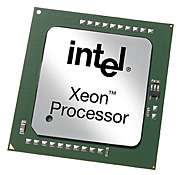
Intel Xeon Processor

Intel Corporation accounsed today its first low-voltage Intel Xeon processor. It is the first low–voltage Intel Xeon processor to combine dual–core technology with Intel’s innovative power management capabilities, helping to boost energy–efficient price/performance with up to two to four times the performance–per–watt of previous Intel Xeon processors and platforms.

The historical need for raw computing performance has evolved into a drive for energy–efficient performance to meet people’s expanding demands – whether for smaller devices, lower cooling bills or better price/performance per watt. Energy–efficient performance enables equipment manufacturers to optimally balance processing capabilities with power and space constraints to help meet those demands. Intel is driving innovations in multi–core computing architectures through a combination of silicon, architecture, platform and software innovations to enable new levels of performance, capabilities and energy efficiency.

With total dissipated power (TDP) of 31 watts, the new low–voltage Dual–Core Intel Xeon processor is ideal for deployments requiring high compute density and power optimization, including single–height (1U) chassis and blade servers, SAN and NAS solutions, and network infrastructure equipment. The new processor excels at handling demanding multi–threaded, multi–tasking applications such as high–performance computing and financial services.

“The low–voltage Dual–Core Intel Xeon processor’s combined enhancements in performance and energy efficiency, along with the efficient power and cooling design of IBM’s industry–leading BladeCenter, deliver a leadership integer performance–per–watt solution,” said Doug Balog, vice president and business line executive, IBM BladeCenter. “The new IBM BladeCenter Ultra Low Power HS20 blade is a solid example of the innovation being brought to market through Intel and IBM’s blade collaboration.”

To accelerate time to market for telecommunications equipment makers and original equipment manufacturers, Intel also plans to introduce the AdvancedTCA–compliant Intel NetStructure MPCBL0040 Single Board Computer (SBC). This new, high–density–compute SBC features two of the new low–voltage Intel Xeon processors, which equates to four high–performance cores per SBC. With the performance boost of the new dual–core processor, the MPCBL0040 is expected to service far more transactions and subscribers per system than previous generation products, which can help significantly reduce the cost per subscriber and/or transaction and total cost of ownership. This powerful processing capability, offered in the AdvancedTCA standard, is ideal for applications where transaction and subscriber load can increase dramatically in a very short time, such as IP Multimedia Services (IMS), Internet Protocol Television (IPTV), and Wireless Control Plane applications.

Intel is also planning to offer a blade server solution powered by up to two of the new Dual–Core Intel Xeon processors LV for ultra–dense, low–power environments where density is limited by power and cooling capabilities. The Intel Server Compute Blade SBXD62 will enable server OEMs and resellers to offer their small– and medium–sized business customers a blade server platform to help reduce operational costs and extend IT resources through improved price/performance/watt, operational efficiencies, deployment flexibility and simplified management.

The Dual–Core Intel Xeon processor LV 2.0 GHz and 1.66 GHz are available from Intel now for $423 and $209 per unit, respectively, in 1,000–unit quantities.

Source: Intel

3.8 /5 (4 votes)  

Rank 3.8 /5 (4 votes)
Tags

Relevant PhysicsForums posts

More news stories

Nvidia trumpets Tegra 3 phone design wins for 2012

(Phys.org) -- Nvidia’s competitive war paint has a name, Tegra 3. On the heels of Nvidia announcements about lowering costs of its Tegra 3 processors and Nvidia-enabled tablets running Android Ice Cream ...

Electronics / Hardware

created 16 hours ago | popularity 5 / 5 (2) | comments 1 | with audio podcast report

Dell tablet leak: 10.1-inch display, two-battery choice

(Phys.org) -- Headline after headline talks about vendors’ tablets in the wings as likely number-one contenders for the iPad. Such claims have justifiably been taken with a grain of salt, considering ...

Electronics / Consumer & Gadgets

created May 26, 2012 | popularity 4 / 5 (4) | comments 11 | with audio podcast report

Nvidia says Kai platform will turn price tide for tablets

(Phys.org) -- In March, Nvidia gave some signs that they were working to lower the cost of their Tegra 3 processors and they suggested consumers might see prices for Android tablets as low as $199. Connect ...

Electronics / Hardware

created May 24, 2012 | popularity 4.3 / 5 (4) | comments 3 | with audio podcast report

OmniVision tops up sensors for cameras, phones

(Phys.org) -- OmniVision has announced two high-resolution image sensors for the digital still and digital video camera market (DS/DVC) and higher end smartphones. In end-user language, it is a claim for superior ...

Electronics / Hardware

created May 25, 2012 | popularity 5 / 5 (6) | comments 3 | with audio podcast report

MIT researchers devise new means to synchronize a group of robots (w/ Video)

(Phys.org) -- For several years, roboticists have been working out ways to get a group of robots to perform synchronized activities as demonstrated most often in dance routines. It’s not just about trying ...

Electronics / Robotics

created May 25, 2012 | popularity 5 / 5 (1) | comments 1 | with audio podcast report


Stunning image of smallest possible five-ringed structure

Scientists have created and imaged the smallest possible five-ringed structure – about 100,000 times thinner than a human hair – and you'll probably recognise its shape.

'Unzipped' carbon nanotubes could help energize fuel cells, batteries

Multi-walled carbon nanotubes riddled with defects and impurities on the outside could replace some of the expensive platinum catalysts used in fuel cells and metal-air batteries, according to scientists at ...

Change in developmental timing was crucial in the evolutionary shift from dinosaurs to birds: study

At first glance, it's hard to see how a common house sparrow and a Tyrannosaurus Rex might have anything in common. After all, one is a bird that weighs less than an ounce, and the other is a dinosaur that ...

Computer model used to pinpoint prime materials for efficient carbon capture

When power plants begin capturing their carbon emissions to reduce greenhouse gases – and to most in the electric power industry, it's a question of when, not if – it will be an expensive undertaking.

T cells 'hunt' parasites like animal predators seek prey, study shows

By pairing an intimate knowledge of immune-system function with a deep understanding of statistical physics, a cross-disciplinary team at the University of Pennsylvania has arrived at a surprising finding: T cells use a movement ...

Land and sea species differ in climate change response: study

(Phys.org) -- Marine and terrestrial species will likely differ in their responses to climate warming, new research by Simon Fraser University and Australia’s University of Tasmania has found.